“Come With Me,” the Cowboy Said to Two Banished Widows—Neither Knew They Were About to Find Home
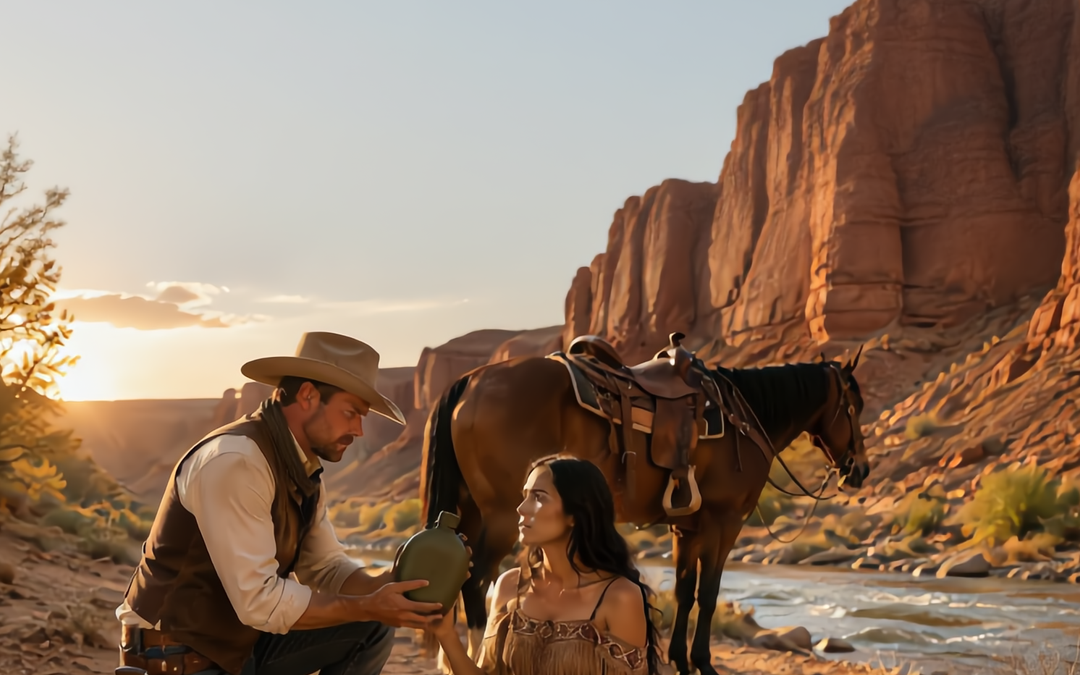
—
## **Part 2**
**And Ayana realized the people who had banished them had not come to punish them—they had come to ask them to return.**
For several seconds, neither widow answered.
The elder looked older than Ayana remembered.
Ashamed too.
“We let grief become fear,” he said.
Nita’s eyes filled with tears.
“And fear became cruelty.”
Ayana stared at him.
“You called us cursed.”
The elder lowered his eyes.
“Yes.”
“You told us our husbands died because misfortune followed us.”
“Yes.”
“You sent us into winter.”
His face tightened.
“Yes.”
The simplicity of his answers hurt more than excuses would have.
Another rider dismounted.
Then another.
Men who had once avoided looking directly at the widows now stood awkwardly beneath Ethan’s fence.
The elder continued.
“After you left, people questioned what we had done.”
“After?” Ayana repeated.
Her voice trembled.
“Not before?”
No one answered.
Nita stepped forward.
“Did anyone come looking for us?”
The elder hesitated.
That was answer enough.
Nita turned away.
Ethan remained several feet behind the women.
He did not interrupt.
This was not his apology to accept.
The elder took another step.
“Your husbands died defending others. Their deaths were not punishment.”
Ayana’s jaw tightened.
“We knew that.”
“We should have known it too.”
The wind moved through the dry grass.
Finally, the elder said what he had ridden miles to say.
“Come home.”
Nita inhaled sharply.
Ayana looked toward her.
There it was.
The invitation they had once prayed for.
The words that might have saved them weeks earlier.
But the timing had changed everything.
Nita looked toward the cabin.
The garden.
The horse trough.
The repaired fence she had helped build.
Then toward Ethan.
He immediately shook his head.
“Don’t decide because of me.”
Ayana frowned.
“You gave us this home.”
“I gave you a room.”
“You gave us more.”
Ethan looked uncomfortable.
“I stopped on a road.”
“That mattered.”
The elder waited.
Nita whispered, “What do we do?”
Ayana did not know.
Her heart still belonged partly to the people who had raised her.
But her trust belonged somewhere else now.
The elder reached inside his coat.
He removed two small leather bundles.
Ayana recognized them.
Her breath stopped.
They had belonged to their husbands.
Personal items.
Objects Ayana believed had been lost after the deaths.
“Where did you get those?”
The elder’s expression darkened.
“That is why we truly came.”
Ayana stared.
He continued.
“We discovered something while searching through what remained after the fighting.”
Ethan’s posture changed.
“What?”
The elder looked directly at Ayana.
“Your husbands did not die where we were told they died.”
Nita covered her mouth.
Ayana went still.
“The story we were given was false.”
The elder’s voice dropped.
“And the man who spread the first accusation against you was also the last man seen riding with both husbands alive.”
Ayana’s blood turned cold.
Suddenly the banishment looked different.
Not superstition.
Not merely grief.
Perhaps someone had needed the widows gone.
The elder glanced toward the ridge.
“We believe he knows we have come here.”
A distant gunshot cracked across the valley.
Every horse jerked.
Ethan reached for his rifle.
Then another shot struck the fence.
The elder shouted:
“Down!”
Ayana saw movement among the rocks.
Someone had followed them.
And whoever had worked so hard to banish two grieving widows had come to make certain they never returned.
The second bullet struck the water barrel.
Wood exploded outward.
Nita screamed.
Ethan grabbed her arm and pulled her behind the cabin wall.
“Stay low!”
Ayana dropped beside the elder.
“Who is it?”
The old man did not answer immediately.
That frightened her more than the gunfire.
A third shot cracked from the ridge.
One of the Apache riders returned fire.
Dust jumped from the rocks.
Ethan crouched near the corner of the cabin, studying the terrain.
“How many?”
“Three,” one rider said.
“Maybe four.”
The elder finally turned toward Ayana.
“There is something else you should know.”
She stared at him.
“Now?”
“I should have told you before we ever rode here.”
Another bullet struck the fence.
Ethan shouted for everyone to keep their heads down.
The elder continued anyway.
“The man who accused you first was Talon.”
Ayana knew the name.
Everyone did.
Talon had been close to several elders.
He had also traveled with both husbands before their deaths.
Nita crawled closer.
“He told us they were killed in the attack.”
“Yes.”
“That was a lie?”
“We believe part of it was.”
Ayana felt suddenly sick.
“What happened?”
The elder removed one of the leather bundles.
Inside was a small carved token.
Ayana recognized her husband’s work instantly.
He had carried it for years.
“There was blood on this when we found it,” the elder said.
“Where?”
“Not at the place of battle.”
Ayana stopped breathing.
“Then where?”
“Near a ravine several miles east.”
The elder swallowed.
“Far from where Talon said the fighting happened.”
Ethan heard enough.
“He wanted the widows gone.”
The elder nodded.
“Why?” Ayana demanded.
“We did not understand at first.”
Nita whispered:
“Land.”
Everyone looked toward her.
Nita’s face had gone pale.
“My husband once argued with Talon about grazing rights near the eastern spring.”
Ayana remembered.
So did she.
A stretch of land used by several families.
Nothing rich.
Nothing extraordinary.
Except for water.
In Arizona, water could turn worthless land into survival.
The elder nodded grimly.
“After you were banished, Talon’s relatives claimed both families had no surviving right to that spring.”
Ayana felt rage rising.
Their husbands died.
The widows were blamed.
Then removed.
And somehow Talon’s family gained what remained.
“No,” she whispered.
The elder lowered his head.
“We failed you twice.”
First by believing the accusation.
Then by not asking who benefited from it.
A shot struck the porch post.
Ethan flinched.
“Apologies later.”
He looked toward the riders.
“Can we get around the ridge?”
One Apache man nodded.
“There’s a dry wash behind the barn.”
Ethan handed him a spare rifle.
“Two of you go.”
The elder frowned.
“You command my men now?”
“No.”
Ethan pointed toward the ridge.
“I prefer not being shot.”
Despite everything, Ayana almost laughed.
The elder gave one sharp nod.
Two riders disappeared behind the barn.
Ethan turned toward Ayana.
“You stay here.”
“No.”
“Ayana.”
“This began with us.”
“That doesn’t mean you need a bullet in your shoulder.”
She stared at him.
“You stood beside us when you knew nothing about our past.”
Ethan’s jaw tightened.
“And now I know enough to want you alive.”
The words stopped her.
Not romantic.
Not dramatic.
Simply true.
Ayana looked away.
Then another voice came from the ridge.
“Send them out!”
The elder froze.
Ayana recognized it too.
Talon.
His voice carried across the ranch.
“This does not concern the cowboy!”
Ethan muttered:
“It does now.”
Talon shouted again.
“Ayana! Nita! You should have stayed gone!”
Nita’s face twisted.
Ayana rose slightly.
Ethan pulled her down.
“What are you doing?”
“Talking.”
“To the man shooting at us?”
“You talk to cattle.”
“Cattle rarely shoot back.”
Ayana ignored him.
She raised her voice.
“Talon!”
Silence from the ridge.
Then:
“You brought them back!”
“No,” Ayana answered. “They came to us.”
“You poisoned the elders against me.”
“You did that yourself.”
A bullet struck dirt near the cabin.
Ethan gave her a look.
“That went well.”
Ayana almost smiled.
Then Talon shouted:
“Your husbands were fools!”
Everything inside her stopped.
Nita grabbed her arm.
Talon continued.
“They would not listen!”
The elder’s eyes narrowed.
Ethan whispered:
“Keep him talking.”
Ayana understood.
“You killed them?”
Silence.
Then:
“They attacked me first!”
The elder’s expression changed.
There.
A confession.
Not complete.
Enough.
Nita began crying.
Ayana felt strangely calm.
Perhaps because some part of her had already known.
The accusation against two grieving women had never made sense.
Now it did.
Talon shouted:
“They chose a useless patch of land over peace!”
“The spring,” Ayana called back.
“They refused to let your family take it.”
No answer.
“You killed them.”
“They forced me!”
The elder closed his eyes.
Ethan looked toward the wash.
Still no sign of the two riders.
He whispered:
“A little longer.”
Ayana shouted again.
“And after killing them, you blamed us.”
Talon’s voice came ragged now.
“You were widows. No sons old enough to fight the claim. You should have left quietly.”
Nita covered her face.
That sentence changed everything.
Even the elder looked physically ill.
Ayana understood then that the deepest cruelty had not been the lie.
It had been how easily people accepted it.
Because the targets were already grieving.
Already vulnerable.
Already women with less influence than the man accusing them.
She rose.
This time Ethan did not stop her completely.
He held her arm.
“Not too high.”
Ayana looked toward the ridge.
“You sent us into winter so you could steal a spring.”
Talon answered:
“I did what I had to do.”
“No.”
Ayana’s voice carried clearly.
“You did what you thought no one would punish you for.”
Then gunfire erupted from behind the ridge.
Not toward the ranch.
Behind Talon.
The two Apache riders had reached the wash.
A horse bolted across the skyline.
A man shouted.
Ethan rose and aimed.
“Drop your weapons!”
For several seconds, confusion ruled the ridge.
Then one rifle appeared above the rocks.
And was thrown down.
Another.
Then a third.
Talon appeared last.
His arms raised.
The elder’s riders surrounded him.
No one fired.
Ayana was grateful for that.
Not because she forgave him.
She did not.
But because she wanted truth spoken where everyone could hear it.
Not buried beside another body.
—
Talon was taken back to the village under guard.
Ayana and Nita did not immediately follow.
The elder remained at Ethan’s ranch until evening.
They sat outside the cabin as the sky turned orange.
Nita held her husband’s leather bundle in both hands.
She had barely spoken since Talon’s confession.
Ayana understood.
Some grief becomes heavier when uncertainty disappears.
Hope—even false hope—sometimes weighs less than truth.
The elder finally spoke.
“We cannot undo what happened.”
“No,” Ayana said.
“We can return your place.”
She looked at him.
“Can you?”
He hesitated.
That was the right hesitation.
A place was not the same after people had thrown you out of it.
“We can restore your rights,” he corrected.
“The spring. Your families’ claims. Your homes.”
Nita looked toward him.
“Our homes?”
“They were never given away officially.”
Ayana’s expression hardened.
“But someone used them.”
“Yes.”
The elder looked ashamed.
“Talon’s relatives.”
Silence.
Nita wiped her eyes.
“I want my husband’s things.”
“You will have them.”
“And his name cleared.”
“Yes.”
“And no woman is ever banished again because someone decides grief is a curse.”
The elder looked toward her.
“That must be discussed with—”
“No.”
Nita’s voice surprised everyone.
Even herself.
She straightened.
“Discuss everything else.”
Her hands stopped shaking.
“But not that.”
Ayana watched the younger widow transform before her eyes.
The woman who had looked backward on the road hoping someone would rescue them was gone.
This Nita had survived the road.
The cold.
The exile.
And the truth.
She continued.
“You want us to return?”
The elder nodded.
“Then return must mean something changed.”
He was silent.
Then bowed his head.
“It will.”
Ayana believed he intended it.
Whether the entire tribe would honor it remained another question.
But intention was at least a beginning.
The elder looked toward Ayana.
“And you?”
She glanced at Ethan.
He immediately looked away.
As if he feared his face might influence her answer.
That irritated her.
“You have something to say?”
“No.”
“You always have something to say when fences are involved.”
“Fences are easier.”
Nita smiled faintly.
The elder waited.
Ayana looked toward the ranch.
Weeks earlier, it had been only Ethan’s place.
Now she saw her repairs in the stable.
Nita’s garden beds.
A blanket hanging outside that belonged to neither woman originally but somehow had become theirs.
Three cups on a table instead of one.
Three chairs around the fire.
Home had happened quietly.
Without ceremony.
Without anyone declaring it.
She finally answered.
“I will go back.”
Ethan looked at her.
“But not to stay.”
The elder nodded.
“I need to bury what should have been buried properly.”
Her voice tightened.
“I need to stand where my husband lived and where he died.”
She looked toward Nita.
“And we need to make sure Talon’s lie ends publicly.”
Nita nodded.
Ayana continued.
“Then I will decide where I live.”
The elder accepted that.
Before leaving, he turned toward Ethan.
“You protected them.”
Ethan shook his head.
“They protected themselves.”
“You stopped.”
“I had a horse.”
“You offered shelter.”
“I had a cabin.”
The elder smiled faintly.
“You make every kindness sound accidental.”
Ethan considered that.
“Maybe kindness should be ordinary.”
The elder stared at him.
Then nodded.
“Maybe.”
—
Three days later, Ethan rode with Ayana and Nita to the village.
The return was nothing like the exile.
People lined the path.
Some watched with guilt.
Some with relief.
Some could not meet the widows’ eyes.
Ayana recognized every face.
The woman who had brought food after her husband’s death.
The man who later crossed the path to avoid her.
Children who had once played outside her lodge.
Elders who had voted to banish her.
Nobody spoke until the central gathering.
Talon stood under guard.
He confessed after several witnesses repeated what they had heard at Ethan’s ranch.
The stolen land claim was reversed.
The spring rights returned to the widows’ families.
More importantly, the elders publicly withdrew every accusation made against Ayana and Nita.
The oldest elder stood before the entire community.
“We called grief a curse because blame was easier than sorrow.”
Ayana felt tears sting her eyes.
“We punished the innocent because we were afraid to face what truly happened.”
He looked directly at the widows.
“We cannot erase the road we made you walk.”
“No,” Ayana said quietly.
“But we can promise no one walks it again for the same reason.”
Nita stepped forward.
“Promise it publicly.”
So they did.
The council agreed that widowhood, death, illness, or supposed omens could never alone justify exile.
It was not perfect justice.
Perfect justice would have returned their husbands.
Nothing could.
But it was something.
A boundary drawn around future cruelty.
And sometimes that is what survivors can force from people who once failed them.
—
That evening, Ayana visited her old home.
Dust covered part of the floor.
Someone had moved a basket.
Her husband’s carving knife still rested in a wooden box.
She sat alone for a long time.
Ethan remained outside.
Eventually she called:
“You can come in.”
He appeared at the entrance.
“This was our home.”
He nodded.
“My husband built that shelf.”
Ethan examined it.
“Crooked.”
Ayana stared at him.
Then laughed through tears.
“He knew.”
They stood in silence.
Finally she said:
“I thought coming back would make me want to stay.”
“And?”
“It doesn’t.”
Ethan looked toward her.
“That bother you?”
“No.”
She looked around once more.
“This is where my first life happened.”
Then toward him.
“I don’t think it’s where the next one belongs.”
Ethan’s face became very still.
Ayana smiled.
“You are not going to ask?”
“Ask what?”
“If I’m coming back to the ranch.”
“I thought you said you were deciding.”
“I decided.”
He waited.
Ayana shook her head.
“You are impossible.”
“So?”
“So yes.”
Ethan exhaled.
Just once.
But she noticed.
“You were worried.”
“No.”
“You were.”
“A little.”
That satisfied her immensely.
—
Nita chose differently.
For several weeks, she remained in the village.
Not because she had forgotten the banishment.
Because she wanted to reclaim something that had been taken from her.
Her husband’s family welcomed her back.
The garden outside her old lodge had died.
She replanted it.
Then, one morning, she arrived at Ethan’s ranch carrying two bags.
Ayana stared.
“You’re staying?”
Nita shrugged.
“For a while.”
Ethan looked toward the bags.
“That’s more than a while.”
“There are vegetables in one.”
“Then stay forever.”
Nita laughed.
The ranch changed again.
Over the following year, it became a place between worlds.
Travelers stopped there.
Apache families visiting the settlement rested there.
Ranchers needing help with horses came to Ayana.
People seeking seeds somehow ended up talking to Nita for hours.
Ethan complained constantly about how many people were now visiting his formerly quiet property.
Nobody believed him.
Especially Ayana.
One evening, the three sat outside beneath a sky washed with stars.
Nita looked toward Ethan.
“Do you remember what you said?”
“What?”
“On the road.”
Ethan frowned.
“I say many brilliant things.”
Ayana laughed.
“You barely speak.”
“Exactly. Easier to remember.”
Nita smiled.
“Come with me.”
Ethan looked down at his coffee.
“I remember.”
“You had no idea what would happen.”
“No.”
Ayana studied him.
“Would you do it again?”
Ethan looked at the cabin.
The garden.
The horses Ayana had trained.
The lantern Nita insisted should always burn near the door in winter, in case another traveler became lost.
Then he looked at the two women.
“Yes.”
“Even knowing armed men would shoot at your water barrel?”
He considered that.
“I liked that barrel.”
Ayana laughed.
Nita nearly spilled her drink.
And Ethan smiled.
—
Years later, people told the story differently depending on who was speaking.
Some said Ethan Walker rescued two banished Apache widows.
Ayana disliked that version.
“We rescued him from his terrible cooking,” she would say.
Nita insisted this was historically accurate.
Others said Ayana and Nita had been rejected by one home and found another.
That was closer.
But still incomplete.
Because home had not simply been handed to them.
They built it.
Fence by fence.
Meal by meal.
Conversation by conversation.
They rebuilt themselves while rebuilding Ethan’s lonely ranch.
And when their old community finally admitted its cruelty, the widows discovered something powerful:
Forgiveness did not require returning to who they had been.
An apology did not create an obligation.
They could accept regret without surrendering the lives they had built afterward.
For Ayana, that was the greatest freedom of all.
She could love the people she came from without pretending they had never hurt her.
She could honor her husband without spending the rest of her life living only inside his memory.
And she could accept Ethan’s kindness without owing him herself in return.
One winter evening years later, snow dusted the high hills.
Ayana stepped outside and found Ethan placing another lantern beside the trail.
“You expect company?”
“No.”
“Then why light it?”
He shrugged.
“Someone might need it.”
Ayana stared at the lantern.
Then at the man who had once stopped beside two exhausted women because he could not convince himself to ride past.
“Ethan.”
“Yes?”
“You know that road changed our lives.”
He nodded.
Ayana smiled.
“Yours too.”
He looked toward the noisy cabin where Nita was arguing with a visitor about potatoes.
“Yes.”
Then, after a pause:
“Mine too.”
The lantern burned against the winter darkness.
A small light beside an enormous desert.
Not enough to warm the whole world.
Just enough to show someone the way toward one open door.
❤️ **Sometimes home is not where you were born. Sometimes home is the place where someone sees you abandoned on the road, makes room beside them, and says, “Come with me.”**
**Disclaimer:** This story is entirely fictional and created for entertainment purposes only. It does not represent any organization or individual, nor does it encourage inappropriate behavior. The content was generated with AI assistance.








