He Found an Injured Apache Woman Beside the Trail—Then She Revealed His Father’s Secret
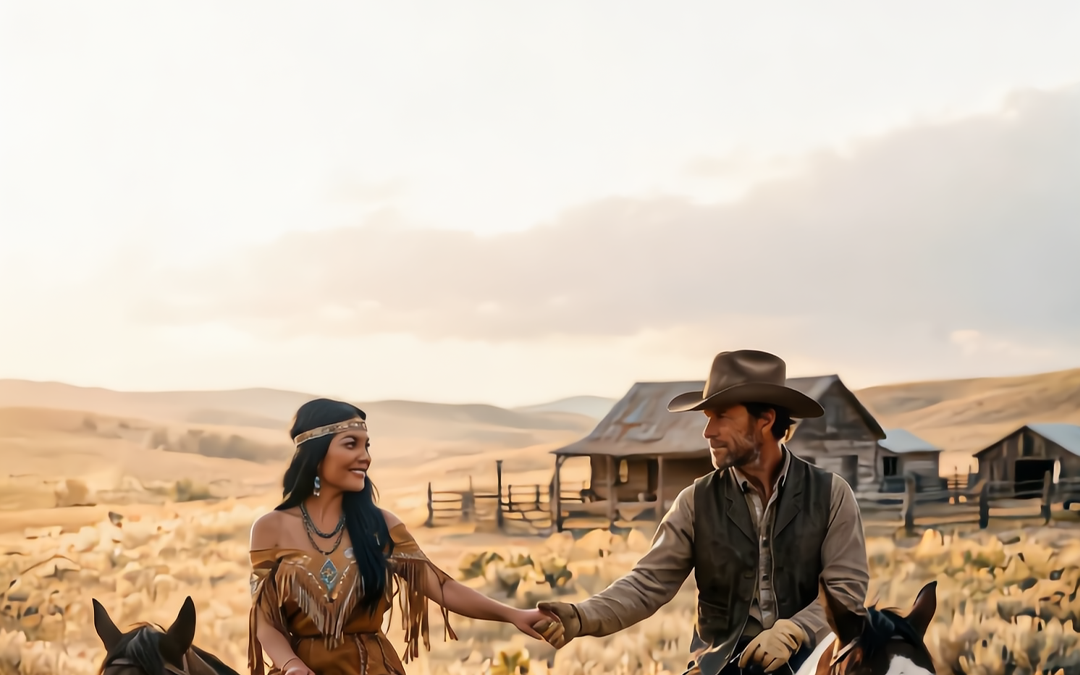
—
## **Part 2**
**Then Mara looked toward the dark ridge outside Caleb’s window and whispered, “If Elias Vain is alive, your father didn’t hide these records from history—he hid them from him.”**
Caleb wanted to burn the map.
Destroy the key.
Seal the chamber forever.
“If these men want paper badly enough to kill for it, maybe the safest thing is to make sure nobody gets it.”
Mara stepped between him and the fire.
“No.”
“Mara—”
“My family already lost the land.”
Her voice trembled.
“Then they lost the truth.”
She looked directly at him.
“I won’t lose both.”
Caleb slowly lowered the map.
They made copies of several documents and hid the originals beneath the cabin again.
Before dawn, Caleb saddled his horse.
Mara carried the key.
He carried his rifle.
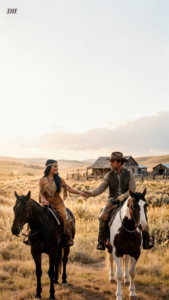
As they passed the barn, Caleb noticed his new cow pacing nervously.
Then he saw tracks outside the fence.
Someone had been there during the night.
Watching.
They left immediately.
On the road, Mara finally explained.
“Elias Vain worked as a land agent.”
“For who?”
“Men rich enough to make laws feel optional.”
Years earlier, Elias had managed transfers involving Apache territory.
Then he disappeared.
Everyone assumed he was dead.
“Why come back now?” Caleb asked.
“Maybe he never left.”
They reached Black Ridge before sunrise.
An abandoned mining structure stood hidden among stone and brush.
Inside, they found blankets.
Food.
Ammunition.
Stacks of records.
Someone had lived there recently.
One wall was covered in maps and property numbers.
Caleb moved closer.
His own ranch appeared among them.
Mara found names from her family.
Then a voice emerged from the darkness.
“Daniel’s boy.”
Caleb turned.
An old man stepped into the lantern light.
Elias Vain.
Older.
Thin.
But unmistakably confident.
Two armed men appeared behind him.
Elias looked at Mara.
“Your grandmother was far more cooperative.”
Mara’s face hardened.
“You chased her off her land.”
“I conducted business.”
“You stole it.”
Elias smiled.
“Words change when enough years pass.”
Caleb raised his rifle.
“Why do you want the map?”
“Because the railroad is coming.”
Silence.
Elias continued.
“Land people ignored forty years ago is about to become valuable.”
He looked toward Mara.
“And if certain original documents surface, several important men may discover they never legally owned what they sold.”
Mara gripped the pouch.
Elias noticed.
“The key.”
Caleb stepped between them.
“No.”
One of Elias’s men advanced.
Caleb kicked over a lantern.
Darkness swallowed the mine.
“RUN!”
Mara disappeared into a narrow passage.
Caleb followed.
Gunfire exploded behind them.
They raced deeper into the mountain.
At the end of the tunnel stood a massive stone door.
The strange symbol covered its center.
Mara pulled out the key.
“Please.”
Footsteps grew louder.
The key turned.
The stone door opened.
Inside rested one wooden chest.
Caleb and Mara ran toward it.
Mara inserted the key again.
The lid opened.
Documents filled the interior.
Original certificates.
Boundary maps.
Letters.
And a sealed statement in Daniel Turner’s handwriting.
Mara unfolded the first land record.
Her breath stopped.
“My family.”
Caleb looked.
The legal heir named on the document belonged to Mara’s bloodline.
Everything her grandmother had claimed was true.
Then Elias’s voice came from the doorway.
“Step away from the chest.”
Caleb turned.
Elias had arrived.
His men raised their weapons.
Mara clutched the original certificate against her chest.
Elias extended his hand.
“Give it to me.”
“No.”
“Mara.”
For the first time, she did not look frightened.
“My family ran because men like you taught them fear.”
She lifted her chin.
“I’m done running.”
Elias’s expression hardened.
His hand moved toward his gun—
and Caleb suddenly realized the narrow passage behind Mara led somewhere else.
An exit.
He met her eyes.
She understood.
Caleb lunged forward.
“GO!”
Mara grabbed the documents and disappeared into the passage as the mine erupted into chaos.
Caleb hit Elias before the old man could draw.
Both crashed against the stone wall.
One gun fired.
The shot exploded through the tunnel.
Caleb rolled aside as another of Elias’s men rushed toward him.
He swung the empty rifle like a club.
Wood struck shoulder.
The man stumbled.
Caleb ran.
Behind him Elias shouted:
“Stop him!”
Caleb plunged into the narrow passage Mara had taken.
The tunnel twisted sharply.
He could hear Mara ahead.
Then footsteps behind.
“Mara!”
“Keep coming!”
A pale strip of dawn appeared in the distance.
An exit.
They burst outside onto the eastern side of Black Ridge.
Their horse was nowhere nearby.
“Now what?”
Mara pointed downhill.
“We run.”
Caleb almost laughed.
“You have excellent plans.”
“I had a better one until Elias arrived.”
Gunfire cracked behind them.
That ended the conversation.
They slid down loose rock, crossed a dry wash, and disappeared among cedar trees.
Eventually they reached the place where Caleb had tied a second horse farther from the mine.
Mara stared.
“You planned that?”
“I’m occasionally useful.”
They mounted.
Then rode hard toward the Turner ranch.
Only after they had put miles between themselves and Black Ridge did Caleb notice Mara smiling.
“What?”
“I sent a message.”
“When?”
“Before we entered the mine.”
“To who?”
“A judge my grandmother trusted.”
Caleb stared at her.
“You could have mentioned that.”
“You were busy complaining.”
He almost smiled.
Almost.
Then he looked at the documents tucked securely beneath her coat.
“Do you think it’s enough?”
Mara’s expression became serious.
“It has to be.”
—
They reached the ranch near sunrise.
Caleb barely had time to water the horse before dust appeared behind them.
Elias.
Three riders.
Maybe four.
Mara stepped onto the porch.
Caleb moved beside her.
“Inside.”
“No.”
“Mara.”
“I’m tired of hiding.”
Elias stopped twenty yards from the cabin.
“Give me the papers.”
Caleb rested one hand near his revolver.
“You’ve been asking that a lot.”
“Those documents belong to people who paid for them.”
Mara answered.
“No. They belong to the people whose names are written on them.”
Elias looked at her with open contempt.
“You think paper will give your family back forty years?”
“No.”
Mara’s voice remained calm.
“But truth might give the next generation something you couldn’t steal.”
One of Elias’s men started forward.
Caleb drew.
“Take another step.”
Everyone froze.
Then another sound reached them.
Hoofbeats.
Many.
Elias turned.
Riders appeared across the ridge.
A wagon followed.
At the front rode a gray-haired man wearing a dark coat.
Mara exhaled.
“The judge.”
Beside him rode lawmen.
And two witnesses Mara had contacted through people who still remembered her grandmother.
Elias’s face finally showed fear.
The judge dismounted.
“What is happening here?”
Elias immediately recovered.
“These two have stolen documents and fabricated a claim against legitimate landowners.”
Mara handed over Daniel Turner’s sealed statement.
Caleb brought copies from the underground chamber.
The judge opened the first document.
Then the next.
His face gradually changed.
“These signatures…”
“They match surviving county records,” Mara said.
Elias laughed nervously.
“Forgery.”
The judge looked up.
“You seem remarkably certain before examination.”
Silence.
Caleb brought the journal.
“My father wrote about the original scheme.”
Mara produced the land certificate.
“And this identifies my family as legal heirs.”
The judge read.
One lawman moved closer to Elias.
Elias stepped backward.
“That proves nothing.”
“Perhaps.”
The judge folded the paper carefully.
“But it proves enough to begin an investigation.”
He looked toward the lawman.
“Take Mr. Vain into custody until we determine why he appears repeatedly in records he claims not to recognize.”
Elias exploded.
“You have no authority—”
The lawman removed his weapon.
“I suggest you discuss authority in town.”
Mara watched in silence as Elias was led away.
No triumph appeared on her face.
Only exhaustion.
Caleb understood.
Some victories came too late to feel like celebrations.
—
The investigation lasted weeks.
Then months.
County records were compared with Daniel Turner’s originals.
Old signatures were authenticated.
Witnesses came forward.
One former clerk admitted that certain agreements had been altered after families had already been driven away.
Another revealed that land agents routinely recorded property as abandoned even while the rightful occupants were being prevented from returning.
The most important findings concerned the territory named in Mara’s family papers.
The land had never been legally surrendered.
Her family’s claim was formally recognized.
It could not restore everything.
People had died.
Families had scattered.
Forty years could not be erased by a judge’s signature.
Mara understood that.
But one evening, after receiving the decision, she stood outside Caleb’s cabin holding the paper with both hands.
“My grandmother died believing nobody would ever believe her.”
Caleb stood beside her.
“They believe her now.”
Mara looked toward the darkening hills.
“I wish she could see it.”
Caleb said nothing for a moment.
Then:
“Maybe this was how she made sure somebody eventually would.”
Mara folded the document.
For once, she did not hide her tears.
—
The evidence also protected Caleb’s ranch.
Daniel’s records showed the history of the Turner property clearly enough to stop speculators from challenging its title.
For the first time in years, Caleb’s land felt secure.
His finances, however, were not.
Mara reminded him of that the following morning.
“You’re still broke.”
Caleb stared at her.
“That was tender.”
“I didn’t say the truth would make you rich.”
He looked toward the barn.
The brown cow he had bought in town stood chewing hay.
“That animal cost me everything.”
Mara studied her.
“She’s healthy.”
“She’d better be.”
Months later, the cow delivered a strong calf.
Then another purchase became possible.
Then another.
Slowly, the Turner herd returned.
Mara helped.
Not because Caleb asked her to stay.
He actually tried not to.
“You have land to reclaim.”
“I have choices.”
“You have family to find.”
“I can do both.”
Caleb shifted awkwardly.
“What I mean is, you don’t owe me anything.”
Mara looked amused.
“You really think I stayed because I owe you?”
Caleb had no answer.
So Mara stayed.
She began helping families connected to the old land claims locate records.
Some returned to the area.
Others chose not to.
The Turner ranch became a place where people could stop safely on long journeys.
Caleb repaired the spare room.
Then another building.
Then fencing.
Not quickly.
But carefully.
The ranch that had once felt painfully empty gradually filled with voices.
—
One afternoon, Caleb returned to his father’s wooden box.
He had searched it dozens of times.
Now he noticed a narrow false bottom beneath the old photographs.
Inside was one final letter.
His name was written across it.
**Caleb.**
His hands trembled as he opened it.
Daniel had written the letter during the final months of his life.
He explained that Caleb might someday discover things about him that the town never knew.
He admitted being afraid.
He admitted making mistakes.
He admitted that helping Mara’s relatives had placed his own family in danger.
But one sentence stopped Caleb.
*If you ever have to choose between protecting what is yours and protecting someone who has been denied even the right to call anything theirs, I hope you will be braver than I was.*
Caleb read it twice.
Mara stood quietly in the doorway.
“What does it say?”
Caleb handed her the letter.
She read.
Then looked at him.
“He thought he wasn’t brave?”
“Apparently.”
Mara smiled sadly.
“People rarely see themselves the way history eventually does.”
Caleb sat on the edge of the bed.
“My whole life, I thought his legacy was this ranch.”
Mara folded the letter carefully.
“Maybe the ranch was only where he stored it.”
“What?”
She placed the letter back in his hand.
“The real legacy.”
Caleb understood.
Not cattle.
Not acreage.
A decision.
His father had seen people being harmed and chosen not to look away.
Years later, Caleb had ridden into town for one cow—
and been given the same choice beside a dusty road.
He had not known it then.
But by stopping, he had continued the one inheritance that mattered most.
—
Spring changed the valley.
Grass returned.
The herd grew.
Children from families connected to Mara’s community sometimes visited the ranch.
Mara taught them where to find water when trails ran dry.
Caleb taught them how to repair fences.
They frequently mocked his technique.
Mara encouraged this.
“You’re supposed to defend me.”
“Why?”
“Because I own the ranch.”
“That doesn’t make your knots better.”
Caleb pointed at her.
“Your influence is becoming dangerous.”
She laughed.
He had not realized how much he had missed hearing laughter near the cabin until hers became familiar.
One morning they rode to the ridge together.
Below them, cattle moved across the pasture.
The brown cow Caleb had purchased in town grazed among the growing herd.
Mara looked toward her.
“That’s the famous cow.”
“Show respect.”
“She changed your life.”
Caleb shook his head.
“No.”
Mara glanced at him.
“I bought the cow.”
He looked at her.
“I found you.”
The humor faded from her expression.
Caleb continued.
“I rode into town because I thought saving my life meant saving this land.”
He looked across the valley.
“I was wrong.”
“What does it mean now?”
He considered the question.
“Having something worth doing with it.”
Mara looked toward the distant trail where he had first found her.
“I was certain you’d leave me there.”
“I almost did.”
Her eyebrow rose.
“That was supposed to be romantic?”
“I’m bad at this.”
“I’ve noticed.”
Caleb smiled.
Then became serious.
“Why did you trust me?”
“At first?”
“Yes.”
“I didn’t.”
“Helpful.”
“You asked.”
She turned toward him.
“But later, I saw the photograph.”
“My father?”
Mara nodded.
“And I thought maybe kindness could run in families.”
Caleb looked away, suddenly unable to answer.
The wind moved through the grass.
Below them, a calf ran clumsily after its mother.
Mara smiled.
“We didn’t need to make this journey alone.”
Caleb looked at her.
“No.”
He touched the brim of his hat against the morning sun.
“But I’m glad we made it together.”
—
Years later, people still told the story incorrectly.
Some said Caleb Turner had rescued an Apache woman from the wilderness.
Caleb always corrected them.
“I gave her water.”
Others said Mara had saved Caleb’s ranch.
Mara corrected that too.
“He bought the cow.”
Both explanations were technically true.
Neither captured what actually happened.
Caleb had stopped because leaving an injured stranger beside the road felt wrong.
Mara had stayed because the past hidden beneath his ranch belonged to more than one family.
Together, they uncovered records powerful men had expected fear to bury forever.
Mara’s family received legal recognition for land that had been taken through fraud.
Caleb finally understood why his father had lived with secrets.
And the Turner ranch survived—not through sudden wealth, but through patience, rebuilding, and a herd that began with one stubborn brown cow.
The trail where Caleb first found Mara remained.
Sometimes they rode it together.
The hills that once hid armed men eventually became ordinary hills again.
Black Ridge became just another shape against the horizon.
Fear no longer owned the landscape.
One sunset, Caleb and Mara stood outside the rebuilt fence while cattle crossed the pasture.
Mara touched the old symbol on Caleb’s saddle.
“Your father probably never imagined this.”
“No.”
“What do you think he wanted?”
Caleb watched the cattle disappear into the golden grass.
“For somebody to finish what he started.”
Mara looked at him.
“And did we?”
Caleb shook his head.
“I think we started something else.”
A life where neither of them had to spend every morning running from yesterday.
A home built not around secrets, but truth.
A ranch no longer defined by what Caleb feared losing.
And a future Mara finally had permission to choose for herself.
Caleb Turner left home believing one cow represented his last chance.
Instead, his life changed beside an empty Texas trail, when he stopped for a wounded woman everyone else might have passed.
He thought he was bringing Mara to safety.
But she brought him something he had been missing far longer than cattle, money, or luck:
the truth about his father—
and a reason to imagine a future larger than survival.
Sometimes the road that changes your life does not announce itself.
Sometimes it looks like an ordinary ride home.
Sometimes destiny is lying beneath an old blanket beside the trail.
And sometimes the smallest act of compassion opens a door that has been waiting for generations. ❤️
**Disclaimer:** This story is entirely fictional and created for entertainment purposes only. It does not represent any organization or individual, nor does it encourage inappropriate behavior. The content was generated with AI assistance.
Adapted from the story you provided.








