She Whispered, “I’m Sorry… This Is the Only Dress I Have” — Then the CEO Silenced the Entire Room
## Part 2
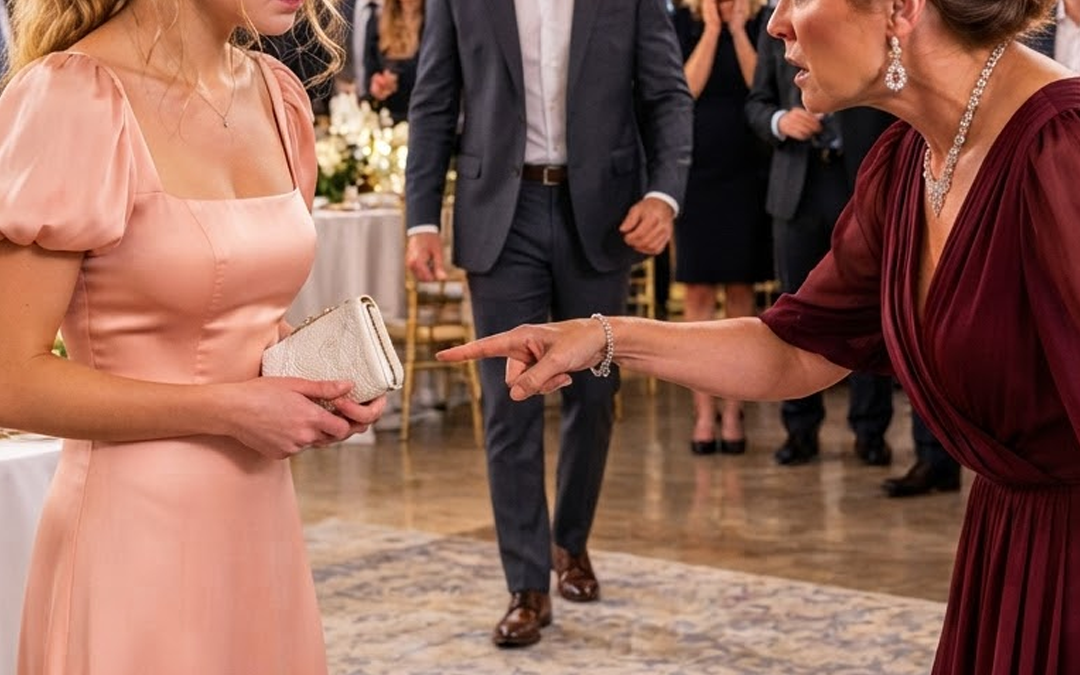
I stared at Daniel as applause began around me.
I couldn’t move.
Someone gently touched my elbow and pointed toward the stage.
Apparently, I was supposed to go up there.
I walked forward on shaking legs.
When I reached Daniel, I whispered, “I think there’s been a mistake.”
“There isn’t.”
“You don’t know me.”
“Not personally.”
That didn’t make me feel better.
He lowered his voice.
“Mr. Alvarez recommended several employees for our community café project months ago. Your name kept coming up.”
I looked toward my boss.
Mr. Alvarez stood near the catering tables, smiling nervously.
“You took online business courses?” Daniel asked.
“Yes.”
“And you’ve talked about opening a bakery?”
My cheeks warmed.
“Someday. It’s just an idea.”
“Why just an idea?”
“Because ideas are free.”
For the first time, Daniel smiled.
“That’s a good answer.”
He faced the audience again.
“The foundation is opening a community café that will provide affordable meals while creating paid training positions for people returning to the workforce. We need an assistant project manager during the setup phase and a café manager once it opens.”
I stopped breathing.
“Emma has experience in food service, staff scheduling, inventory, customer relations, and small-business coursework.”
Then he looked at me.
“We’d like to offer you the position.”
The applause became louder.
But something bothered me.
I stepped toward the microphone.
“Can I say something?”
Daniel handed it to me.
I looked out at the room.
“I appreciate this more than I can explain. But if you’re offering me this because of what just happened…”
My voice shook.
“…then I can’t accept it.”
The applause stopped.
Daniel studied me.
I could see surprise on his face.
“If this is because you feel sorry for me,” I continued, “please give the job to whoever actually earned it.”
For several seconds, neither of us spoke.
Then Daniel reached into his pocket and pulled out a folded piece of paper.
And what he said next changed the entire meaning of that night.
## Part 3
“This,” Daniel said, unfolding the paper, “is why you’re being offered the job.”
He handed it to me.
I recognized Mr. Alvarez’s handwriting.
It was a recommendation letter.
I skimmed the first few lines, then slowed down.
He had written about the morning our delivery driver had called in sick and I’d reorganized the entire opening schedule so we could serve customers without losing half our stock.
He mentioned the spreadsheet I’d built to track waste after noticing we were throwing away too much food.
He wrote about how I’d trained three new employees.
Then I reached the last paragraph.
*Emma thinks she’s only a waitress because that’s the title on her paycheck. She isn’t. She has been helping me run this place for two years.*
My vision blurred.
I looked across the ballroom at Mr. Alvarez.
He lifted one shoulder as if to say, *Well, it’s true.*
Daniel spoke quietly enough that only those near the stage could hear.
“I was going to ask you to interview tomorrow.”
“Interview?”
“Yes.”
“So the job isn’t automatically mine?”
“No.”
I actually laughed.
It came out half laugh, half sob.
“That’s the nicest thing you’ve said all night.”
He looked confused.
“I mean it,” I said. “I don’t want a job because somebody embarrassed me.”
“You won’t get one that way.”
He took the microphone again.
“To clarify, Emma is being offered a paid management-track position based on a recommendation submitted before tonight. The permanent manager role will depend on her performance during the project.”
That sounded real.
Not magical.
Not charity.
Work.
Something I understood.
I handed him the microphone.
“Then I’ll interview.”
“Tomorrow?”
“I work tomorrow.”
“After your shift?”
“Six thirty.”
“Seven?”
I nodded.
“Seven.”
There was another round of applause, but this time I didn’t feel like hiding from it.
When I stepped down from the stage, Victoria was waiting.
I tensed.
She looked uncomfortable.
“I’m sorry,” she said.
I wasn’t sure what to say.
She glanced at my dress.
“What I said was unnecessary.”
“Yes,” I replied.
Her eyebrows lifted slightly, probably because she’d expected me to make it easier for her.
I wasn’t angry enough to fight with her.
But I wasn’t going to pretend it hadn’t hurt.
“I came here already feeling like I didn’t belong,” I said. “You made me feel like I was right.”
Victoria lowered her eyes.
“I understand.”
“I hope you do.”
Then I walked away.
For the rest of the evening, I kept Daniel’s jacket around my shoulders.
Not because I was ashamed of my dress anymore.
I was freezing.
Those ballrooms apparently believed rich people didn’t require heating.
When I got home after midnight, Noah was asleep on the couch with the television running.
I nudged his foot.
“Hey.”
He opened one eye.
“How was rich-people prom?”
I started laughing.
Then I started crying.
He sat up immediately.
“What happened?”
“It’s complicated.”
“Did somebody die?”
“No.”
“Did you get arrested?”
“No!”
“Then we’re probably okay.”
I sat beside him and told him everything.
When I got to the job offer, he stared at me.
“You’re going to manage a café?”
“I have an interview.”
“Same thing.”
“Very much not the same thing.”
He noticed the jacket.
“Whose is that?”
I looked down.
“Oh, no.”
“What?”
“I stole the CEO’s jacket.”
Noah burst out laughing.
I laughed too.
It was the first time in months I’d laughed until my stomach hurt.
The next morning, reality returned quickly.
Rent was still due.
Noah still needed lunch.
I still had an eight-hour shift that became ten hours because Sophie had a family emergency.
At seven that evening, exhausted and smelling like coffee, I walked into the Carter Foundation offices carrying Daniel’s jacket in a garment bag.
Daniel was waiting in a conference room with two other people: Maya Chen, the foundation’s operations director, and Marcus Reed, who oversaw its community programs.
They didn’t ask me inspirational questions.
They asked difficult ones.
How would I control food costs without lowering quality?
How would I handle an employee who repeatedly arrived late?
What should the café do if someone couldn’t afford even the subsidized price of a meal?
How would I balance paying trainees fairly while keeping the project financially sustainable?
I didn’t know every answer.
When I didn’t, I said so.
But I also told them what I’d learned at Bell Street.
“People think food service is mostly food,” I said. “It isn’t. It’s timing, waste, staffing, consistency, and making customers feel welcome even when everything behind the counter is falling apart.”
Maya smiled.
“That’s a better description of operations than some MBA graduates give.”
The interview lasted almost ninety minutes.
At the end, Daniel slid a folder across the table.
Inside was an employment offer.
The salary was nearly twice what I earned at the café.
I stared at the number.
“Is something wrong?” Marcus asked.
“No.”
I swallowed.
“I’ve just never seen my name next to a number like this.”
They gave me time to read everything.
That mattered to me.
Nobody pressured me.
Nobody acted as if gratitude meant I shouldn’t ask questions.
I accepted two days later.
The first few months were harder than the gala.
Much harder.
There was nothing glamorous about renovation delays, health inspections, supplier negotiations, broken refrigeration units, or trying to build a training program while contractors were drilling into walls twenty feet away.
I made mistakes.
During my second month, I ordered too much produce for a trial week and we lost hundreds of dollars in spoilage.
I expected Daniel to regret hiring me.
Instead, Maya sat down with me.
“What happened?”
“I overestimated traffic.”
“Okay. What changes next week?”
That was it.
No humiliation.
No speech.
Fix the problem and learn from it.
So I did.
I became obsessive about inventory.
I built forecasts using neighborhood foot traffic and historical sales data. I negotiated smaller initial deliveries with suppliers. I helped design a rotating menu that used overlapping ingredients so less food went to waste.
I also finished two more online business courses.
Noah complained that I was becoming “aggressively responsible.”
He worked at the café after school once we opened, mostly clearing tables and doing homework in the back office.
He told everybody who would listen, “My sister runs this place.”
I always corrected him.
“I manage it.”
“That’s what I said.”
Six months after the gala, Second Chance Café opened on the corner of Madison and Eighth.
The building had once been an empty pharmacy.
Now sunlight came through wide front windows. There were wooden tables, a long counter, and a community board where local businesses posted job openings.
We sold coffee, sandwiches, soups, and pastries at regular prices, while qualifying families could receive subsidized meals through the foundation.
We also hired trainees who had struggled to reenter the workforce.
On opening morning, I arrived at five.
I wore jeans, comfortable shoes, and a blue apron.
Underneath it, I wore the floral dress.
The same one.
Noah stared when he saw me.
“Seriously?”
“Seriously.”
“You know you can afford another dress now.”
“I own three.”
“Then why that one?”
I smoothed the fabric.
“Because I like this one.”
And I finally did again.
The dress hadn’t changed.
I had.
Mr. Alvarez came to the opening and hugged me so tightly I nearly spilled coffee down his shirt.
“You stole my best employee,” he told Daniel.
Daniel shook his head.
“I think she was leaving eventually.”
Mr. Alvarez looked at me.
“He is right.”
Above the entrance, we hung a photograph taken at the gala.
At first, I hadn’t wanted it there.
I thought it looked ridiculous—me in a faded dress with Daniel’s tuxedo jacket hanging awkwardly around my shoulders.
Then I understood why I wanted to keep it.
Not because Daniel had saved me.
That wasn’t the story I wanted people to see.
The photograph reminded me of the moment I stopped apologizing for circumstances I had spent years working to change.
Daniel visited occasionally, usually without warning.
He’d order black coffee, sit in a corner with his laptop, and somehow still notice everything.
One afternoon, about eight months after opening, he came to the counter while I was checking invoices.
“Busy?”
“Always.”
“Good.”
“That’s easy for you to say. You’re not trying to figure out why we’re missing seventeen blueberry muffins.”
He looked toward the back.
“Noah.”
I stared at him.
“You know my brother surprisingly well.”
“He’s eaten four since I got here.”
“Four?”
“Possibly five.”
I closed my laptop.
“I’m deducting them from his paycheck.”
Daniel laughed.
Then his expression became more serious.
“The board reviewed the café’s first six months.”
My stomach tightened automatically.
“And?”
“Revenue is ahead of projections. Waste is below target. The training program has placed nine people into permanent jobs.”
I tried not to smile too quickly.
“So I’m not fired?”
“Not today.”
“Excellent.”
He slid an envelope across the counter.
Inside was my permanent appointment as general manager.
For a few seconds, I couldn’t speak.
I’d known it was possible.
I’d worked for it.
Still, seeing it on paper was different.
“Congratulations,” Daniel said.
I looked toward the photograph above the door.
“I thought that night changed my life.”
“Didn’t it?”
“Yes. Just not for the reason I thought.”
He waited.
“For a while, I thought you gave me a future.”
Daniel shook his head.
“I didn’t.”
“I know.”
I looked around the café.
At the employees I’d trained.
At Noah pretending he hadn’t eaten five muffins.
At a woman near the window helping her daughter with homework over two bowls of soup.
“You gave me an opening,” I said. “I had to do the rest.”
“Exactly.”
That mattered.
Because kindness isn’t the same as rescuing someone.
Real kindness doesn’t turn another person into a debt they can never repay. It doesn’t require them to stay weak so you can keep feeling generous.
Sometimes it’s simply noticing what someone can do and opening a door that had been locked.
I still have that blue dress.
The tear near the hem has been repaired twice now.
It isn’t fashionable, and it certainly isn’t expensive.
But every time I see it hanging in my closet, I remember the woman I was when I whispered, “This is the only dress I have.”
I wish I could go back to her for thirty seconds.
I’d tell her to lift her head.
I’d tell her there was nothing wrong with working for every dollar in her purse.
I’d tell her that surviving difficult years wasn’t something she needed to disguise beneath expensive fabric.
Most of all, I’d tell her that the room wasn’t going to decide her worth.
A year after the gala, the foundation held the event again.
This time, I attended as the manager of Second Chance Café.
I could finally afford a designer dress if I wanted one.
I didn’t buy one.
I wore a simple navy dress from a department store and shoes I could actually walk in.
Before leaving home, Noah looked me over.
“Very CEO.”
“I’m not a CEO.”
“Give it time.”
At the gala, nobody asked whether I belonged.
People knew my name now.
Some congratulated me on the café. Others asked about the training program.
Victoria was there too.
When we crossed paths, she smiled carefully.
“Emma.”
“Victoria.”
“I heard the café is doing well.”
“It is.”
“I’m glad.”
There wasn’t some dramatic reconciliation between us. We didn’t become friends.
But there was respect where there hadn’t been any before.
That was enough.
Later, I stood near the same spot where I’d once wanted the floor to swallow me.
Daniel walked past and stopped.
“No borrowed jacket tonight?”
“No.”
“Good. I never got the dry-cleaning money.”
I laughed.
“You can afford it.”
“That’s not the principle.”
Across the ballroom, Noah—who had been allowed to attend this time—was trying to convince a waiter to give him another dessert.
I shook my head.
“My responsibility is calling.”
As I started toward him, Daniel said my name.
I turned.
“You did good, Emma.”
I looked around the room.
Then I thought about the café waiting for me the next morning, the employees depending on me, the customers who knew me, and the little brother who no longer had to watch me calculate whether we could afford groceries until payday.
“Yeah,” I said.
“I did.”
And for once, saying that didn’t feel arrogant.
It felt true.
The most important thing I learned wasn’t that wealthy people could be kind or that one lucky evening could magically fix a difficult life.
Nothing was magically fixed.
I still had to show up.
I still had to learn.
I still failed sometimes.
I still worried about Noah, bills, work, and the future.
But one person had looked beyond what I could afford and noticed what I was capable of.
Then he gave me the chance to prove it.
That night at the gala, I’d believed my dress was telling everyone exactly who I was.
I was wrong.
It only told them what I could afford.
Everything that mattered about me couldn’t be seen from across a ballroom.
And once I understood that, I never apologized for that blue dress again.








