THEY KILLED VERY FEW PEOPLE—YET ONE MORNING SHATTERED THE WORLD THAT MADE COMANCHE POWER POSSIBLE
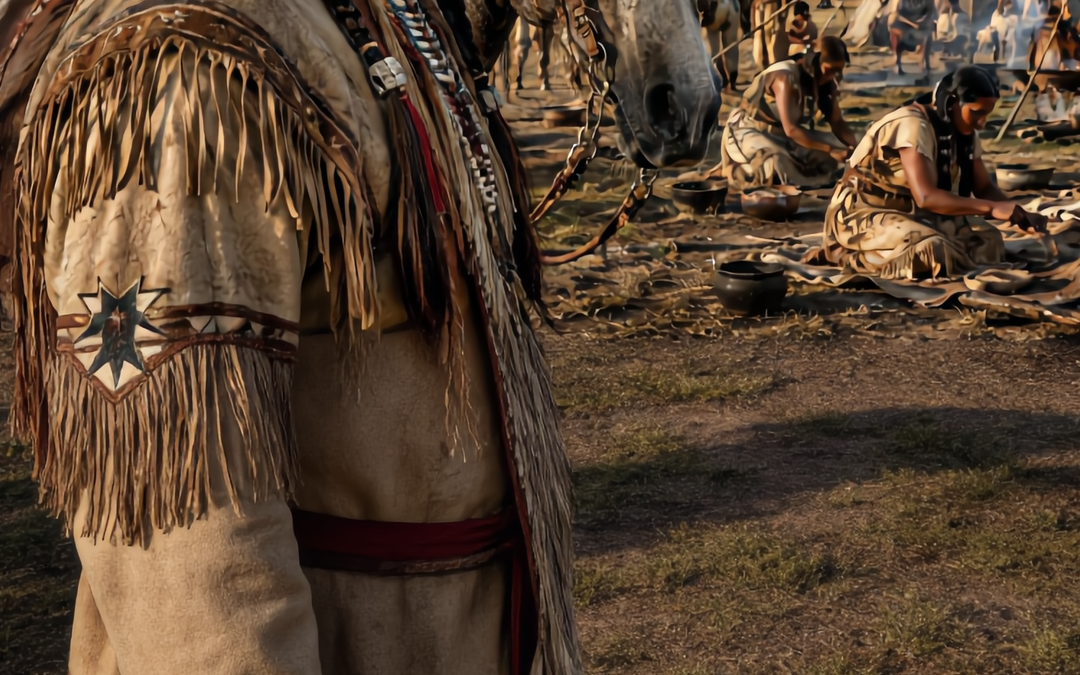
—
## **Part 2**
**By sunrise, the soldiers were already descending into Palo Duro Canyon.**
The attack was not a perfect surprise.
A warning went out.
Warriors responded.
Gunfire echoed between the canyon walls as families scrambled to escape.
But the villages were spread across the canyon floor.
That made a unified defense difficult.
People fled with whatever they could carry.
Some possessions were simply abandoned.
Imagine the impossible choice.
A family might have blankets, food, clothing, tools, lodge materials and children to protect—but only minutes to move.
There was no wagon packed and waiting.
No storage building miles away.
Much of a family’s material world was right there.
And now soldiers were entering it.
The fighting itself produced surprisingly few reported deaths.
Three Native warriors were reported killed.
One soldier on Mackenzie’s side died.
Judged by those numbers alone, Palo Duro could sound like a minor engagement.
It was not.
Once the families had been driven from the camps, Mackenzie’s command controlled what remained behind.
Food.
Shelters.
Possessions.
And horses.
This was where the real damage began.
For generations, the horse had allowed Comanche households to operate across enormous distances.
It carried hunters toward bison.
It transported children and older people.
It pulled household loads.
It connected families to trade.
It allowed rapid movement when danger appeared.
It represented wealth.
And when warriors rode out, horses made their famous military mobility possible.
Take away enough horses and suddenly the whole system becomes harder to operate.
The same was true of food.
Winter provisions represented months of hunting, cutting, preserving and planning.
Burning or destroying those stores did not erase only property.
It erased time.
Labor.
Preparation.
And options.
Families who escaped Palo Duro were alive.
But survival on the Plains required more than a heartbeat.
They still needed to eat.
They still needed shelter.
They still needed to move.
And winter was coming.
Then the soldiers counted what they had captured.
More than **1,400 ponies**.
Some would be distributed to scouts.
Most would not survive what came next.
That was the moment Palo Duro stopped looking like an ordinary battle.
Because Mackenzie’s men now controlled one of the most important foundations of life on the Southern Plains.
**Then the soldiers began taking the horses.**
More than 1,400 ponies had fallen into military hands.
To someone reading a cavalry report, that might sound like a statistic.
To the families who had fled Palo Duro Canyon, it meant something almost impossible to measure.
Those animals were not merely weapons of war.
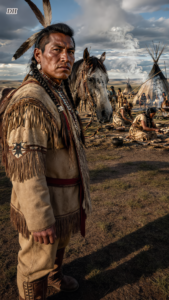
They were transportation.
They were hunting capacity.
They were wealth.
They were trade.
They were the means by which a family could move its lodge, bedding, tools and food.
They could carry children.
They could carry people who could not travel the same distance on foot.
They allowed hunters to reach moving buffalo herds.
They made it possible to relocate quickly when water, grass, weather or danger demanded it.
A large herd created its own logistical problems—every animal needed grass and water—but it also multiplied what a household could do.
Now most of those captured ponies were shot.
The destruction was brutal, but its military logic was clear.
If the Army could not easily catch every mounted Comanche fighter, it could make the world that sustained mounted resistance harder to maintain.
The villages were destroyed.
Possessions were lost.
Stored winter food was ruined.
And hundreds upon hundreds of horses disappeared in a single operation.
The casualty figures still looked small.
The consequences did not.
That is why Palo Duro Canyon becomes almost impossible to understand if the story focuses only on gunfire.
The battle attacked relationships between things.
Think again about the lodge.
Portable shelter worked because people had the means to carry it.
Transportation worked because horses were available.
Hunting at long range worked because mounted hunters could travel.
A large household could move because bedding, containers, tools, food and lodge materials could be loaded and pulled.
Children could travel with the group because the household moved as a coordinated system.
Take away enough animals and suddenly every possession becomes heavier.
Distance becomes greater.
Escape becomes slower.
Food becomes harder to replace.
Winter becomes more dangerous.
That did not mean Palo Duro Canyon single-handedly ended Comanche resistance.
The historical collapse was far more complicated than one battle.
Military pressure continued through the Red River War of 1874–1875.
The destruction of buffalo herds placed devastating pressure on Plains economies.
Commercial hide hunting had expanded dramatically.
Native communities had already suffered from epidemic disease.
Reservation policies narrowed choices.
Previous military losses mattered.
Starvation and exhaustion mattered.
Settler expansion mattered.
No single afternoon can explain all of that.
But Palo Duro exposed the logic with unusual clarity.
The United States military had learned that it did not necessarily need to destroy every warrior individually.
It could attack the support structure around him.
That support structure had always been easier to overlook because it was ordinary.
History celebrates spectacle.
A rider at full gallop is spectacular.
A woman scraping and softening a hide for hours is not.
A mounted raid is dramatic.
Packing bedding into transportable bundles is not.
A battlefield charge looks powerful.
Choosing a campsite with sufficient water and grass does not.
Yet one could not exist without the other.
The famous Comanche rider required a world behind him.
Somebody had prepared food.
Somebody had produced clothing.
Somebody had maintained household goods.
Somebody had managed horses.
Somebody had preserved meat.
Somebody had taught children how to ride.
Somebody had remembered where water could be found.
Somebody had maintained kinship ties between families and bands.
Somebody had negotiated trade.
Somebody had made sure the camp could disappear from one location and rise somewhere else.
The warrior was the visible edge of an enormous system of human labor.
That was the side of Comanche power military paintings rarely captured.
And it is also why the destruction at Palo Duro had consequences far beyond the dead.
### **The horse had changed the household before it changed warfare.**
When horses spread among Indigenous peoples of the Plains through trade, capture and Native exchange networks, Comanche people became some of the continent’s most accomplished equestrians.
That achievement is often told almost entirely through warfare.
But horses changed how much a family could own.
How far it could move.
How quickly it could relocate.
How much material could become part of everyday life.
Before horses, transport capacity placed severe limits on household possessions.
With horses, larger lodges and greater quantities of bedding, food, clothing and equipment could travel.
That might seem like a small domestic detail.
It was actually revolutionary.
A mobile society does not become sophisticated by copying a permanent town.
It becomes sophisticated by solving a different set of problems.
Everything must survive movement.
Containers cannot be too fragile.
Shelter cannot require permanent foundations.
Food must often survive transportation and storage.
People need systems for loading animals.
Loads must be balanced.
Horses must be gathered before departure.
Children must be supervised during the busiest moments.
Everyone must know where they are going.
A destination is not chosen because the horizon looks beautiful.
There must be water.
Grass.
Fuel.
Game.
Protection.
Enough room for people and animals.
The larger the herd, the greater the demands.
That is what the word **mobility** can hide.
It sounds effortless.
It was not.
It was skilled work performed repeatedly.
### **Women were essential to that system.**
The dramatic telling of Plains history can make buffalo hunting appear to end with the kill.
In reality, killing the animal was one step.
A hide left untreated could rot or stiffen.
Meat left unprocessed could spoil.
Every usable part required decisions and work.
Women carried major responsibilities for hide preparation, clothing, shelter materials, food processing, childcare and household production.
Scraping.
Cleaning.
Stretching.
Drying.
Softening.
Cutting.
Sewing.
Repairing.
Those tasks rarely appear in Western paintings.
Yet without them, the material economy of the camp could not function.
Rawhide could become strong containers and equipment.
Tanned hides could become clothing, bedding or robes.
Prepared hides could become part of shelter.
The buffalo entered almost every part of domestic life.
That is why destroying stored food and property struck at far more than comfort.
It struck accumulated labor.
### **Children were learning the system long before adulthood.**
A child growing up in a Comanche camp lived close to the machinery of daily life.
Adults worked nearby.
Horses were nearby.
Food processing happened nearby.
Packing happened nearby.
Skills could be learned through observation, participation, correction and expectation.
Horsemanship began young because riding was not simply a warrior’s skill.
It was part of ordinary life in a horse-centered society.
Children also learned the invisible map of relationships.
Kinship.
Obligation.
Respect.
Leadership.
Trust.
Knowledge of other bands.
Knowledge of neighboring peoples.
Who might trade.
Who might fight.
Who might do both at different times.
Comanche political organization did not revolve around one monarch issuing orders to everyone across Comancheria.
Bands could join or separate.
Leaders depended significantly on reputation and the willingness of others to follow.
To outside governments searching for one chief who could sign for everyone, that flexibility could be deeply frustrating.
But flexibility had advantages.
If relationships changed, groups could reorganize.
If resources moved, people could move.
If leadership failed, followers were not necessarily trapped.
In a fixed state, administration may live in buildings.
In a mobile society, much of it lives in people.
### **Trade made the world larger still.**
The Comanche were not isolated from surrounding economies.
Trade connected them with Wichita, Caddo and Pueblo communities, New Mexican traders, Mexican settlements, Americans and other Indigenous peoples.
Buffalo goods could move outward.
Horses could move vast distances.
Cloth, metal objects, weapons, ammunition, tobacco and agricultural foods could enter Comanche households.
Adaptation was not cultural weakness.
It was how societies worked.
If an object improved hunting, transport, defense, status or trade, people could incorporate it.
The horse itself was the most dramatic example.
It had not always been part of life on the Southern Plains.
Yet Comanche people reorganized economic and social systems around it with extraordinary success.
By the 19th century, horses connected nearly everything.
Domestic mobility.
Hunting.
Trade.
War.
Wealth.
And therefore vulnerability.
### **The same system also contained violence and human complexity.**
Comanche raiding could bring captives into camps.
Some captives were traded or ransomed.
Some experienced severe coercion or abuse.
Others, including children, could be adopted into kinship networks and incorporated so deeply that later efforts to return them to birth communities were sometimes resisted.
There was no single captive experience.
That complexity matters because history becomes dishonest when it turns the Comanche either into flawless heroes or a frontier stereotype.
They were human communities operating inside violent and changing political worlds.
Trade, warfare, kinship, captivity, adoption and diplomacy overlapped.
A horse that carried someone to exchange goods could also carry a raider.
A flexible kinship system could absorb outsiders.
The same mobility that protected families could also extend military reach.
Real history rarely fits into clean moral boxes.
### **And then came the pressure of the 19th century.**
The Comanche system had enormous flexibility.
But flexibility could not solve every problem indefinitely.
Every horse still needed grass.
Every person still needed food.
Every camp still depended on water.
Every household still depended upon labor.
And the buffalo economy could survive only while buffalo remained accessible in sufficient numbers.
As military campaigns intensified and buffalo destruction accelerated, those dependencies became increasingly dangerous.
That is why the destruction of Palo Duro Canyon mattered.
It attacked multiple links simultaneously.
Food.
Shelter.
Property.
Transport.
Horses.
Security.
Mobility.
A chain can withstand pressure at one point.
Strike several points at once and even a highly adaptive system becomes harder to sustain.
That is the deeper meaning hidden behind the surprisingly low casualty count.
The Army did not need Palo Duro to become a field covered with bodies for the operation to have enormous consequences.
Families escaped.
But they escaped into a landscape where the things required to rebuild their previous mobility had been dramatically reduced.
The winter ahead did not care that they had survived the initial gunfire.
Cold still came.
People still needed calories.
Children still needed protection.
Horses that had been killed could not carry lodges.
Food that had been destroyed could not be eaten.
Possessions accumulated over years could not instantly be recreated.
Survival became harder.
Continued military resistance became harder too.
And that was the point.
—
But this story does **not** end with Palo Duro.
It does not end with the Red River War.
And it certainly does not end with the old frontier phrase suggesting that Native peoples simply disappeared when military resistance ended.
They did not.
The Comanche are not a vanished people trapped inside nineteenth-century photographs and cavalry reports.
The **Comanche Nation** remains a living tribal nation, headquartered in southwest Oklahoma, with citizens, government, cultural activity, education, community programs and continuing efforts connected to language and heritage.
That matters.
Too many historical narratives treat Indigenous peoples as present only until the final battle.
Then the camera stops.
Real people continue.
Communities adapt.
Languages can weaken and be revitalized.
Cultural practices change while remaining meaningful.
New generations inherit old histories but live in the present.
The story continues because people continue.
And perhaps that is why the ordinary side of Comanche life deserves as much attention as warfare.
War tells us where powers collided.
Daily life tells us what those powers actually were.
Go back one final time to Palo Duro Canyon.
Forget the tactical arrows on a military map.
Forget, for a moment, the uniforms and the gunfire.
Look at what was actually lying on the canyon floor.
Lodges.
Blankets.
Food.
Tools.
Clothing.
Horses.
Children’s belongings.
Family property.
The material evidence of thousands of ordinary decisions and countless hours of work.
Those things were not scenery behind the battle.
They were part of what the battle was about.
Once you understand that, the familiar image of the Comanche warrior changes.
He does not become less formidable.
He becomes more understandable.
Behind every famous rider stood people processing food, preparing hides, caring for children, handling animals, maintaining relationships, negotiating trade, remembering trails, choosing campsites and carrying a moving world from one horizon to another.
History remembered the rider because he was dramatic.
Life supplied everything that made his ride possible.
**He was never riding alone.**
—
**Important Note:** This is a dramatized narrative retelling based on the historical material supplied for this project. It is intended for educational and entertainment-style storytelling and should not be read as representing every Comanche person, band, family or historical experience. The content was created with the assistance of artificial intelligence.








