PART 2 – Clara’s father called her stupid, took money, and sent her west to a lonely cowboy like damaged property. Weeks later, when powerful ranchers came to seize the cowboy’s land, the “worthless” daughter noticed one number every man in the room had missed.
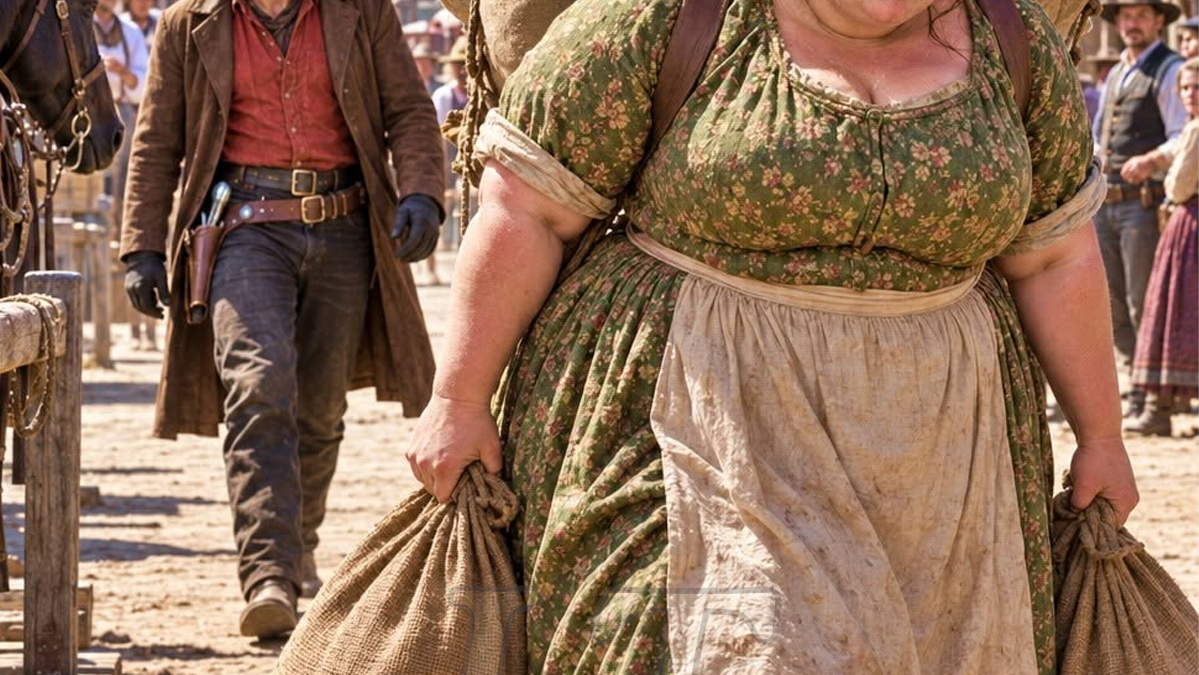
Clara stayed three days.
Then five.
Then twelve.
She never announced that she had decided to remain because, technically, she hadn’t.
Every morning she woke knowing the road east still existed and forty-two dollars remained hidden inside her coat.
Strangely, that knowledge made staying easier.
Samuel never asked when she planned to leave.
He never asked whether she could cook well enough to be useful.
He never discussed marriage.
He simply began setting out two coffee cups each morning.
By the second week, Clara started changing the cabin without intending to.
She repaired a curtain torn by winter wind, tightened a cabinet hinge, cleared stones from a neglected garden patch, and rebuilt the woodpile so rain would drain away rather than soak the lower logs.
Sam noticed.
He simply didn’t turn every useful thing she did into a test of whether she had earned the right to remain.
One afternoon Clara apologized for using several nails from his workbench.
Sam stared at her.
“You live here too.”
Three words.
Then he went back to sharpening his knife.
Clara stood motionless.
Her father had trained her to understand value as permission.
Food belonged to Edwin because he paid for it.
The house belonged to Edwin.
Time belonged to Edwin.
Even Clara’s sewing money would have belonged to him if he had known it existed.
Sam seemed to live by an entirely different arithmetic.
One rainy evening, she found him staring at the ranch accounts.
Clara tried not to look.
Then she saw two freight entries.
“That’s wrong.”
Sam raised his eyes.
“What?”
“You paid freight twice on the same shipment.”
He checked.
She was right.
“Where’d you learn accounts?”
“My father thought women couldn’t understand business.”
“That wasn’t my question.”
Clara looked at him.
“I learned because people make dangerous decisions about you when they think you aren’t listening.”
Sam pushed the ledger across the table.
“Find anything else.”
No praise.
No surprise.
Just trust.
Clara found three more errors before supper.
Two days later, Sam cut his palm repairing fence wire.
Clara cleaned and stitched the wound.
“My mother was sick a long time,” she explained.
Sam did not ask how she died.
He did not ask for the story.
He simply gave Clara his hand.
When she finished, he flexed his fingers.
“Good work.”
“My father said I was slow.”
Sam frowned.
“Were you?”
“No.”
“Then why’d he say it?”
Clara tightened the bandage.
“Maybe because I asked questions.”
Sam studied her.
“Sounds like he needed you to doubt yourself more than he needed you to be wrong.”
That sentence followed her for days.
Then Harlan Voss arrived.
Three riders approached near sunset.
Voss owned the neighboring spread and wanted Samuel’s western grazing acreage.
Sam had refused him twice.
Voss leaned against his saddle and looked Clara over.
“Didn’t know you’d acquired yourself a housekeeper.”
Clara went rigid.
Voss chuckled.
“Big girl. Bet she can carry half the ranch.”
The old instinct returned immediately.
Shrink.
Lower her eyes.
Wait for a man to decide whether defending her was worth the inconvenience.
Instead, Clara stepped forward.
“If you have something to say about me, say it where I can answer.”
Voss blinked.
Then laughed.
“Your woman has a mouth on her.”
Samuel did not step in front of Clara.
“She isn’t my woman.”
Voss smirked.
Samuel continued:
“She’s Clara Bennett. She’s speaking for herself.”
Something inside Clara shifted.
Sam had not rescued her.
He had simply refused to erase her.
Voss’s smile faded.
He warned Sam that land disputes could become expensive.
Three mornings later, twenty-three cattle were missing.
A western fence had been cut cleanly with a tool.
A water trough was damaged the following day.
Then came the attorney’s letter.
It claimed Samuel’s title to the western acreage contained a recording defect and Harlan Voss intended to assert ownership.
Clara read it twice.
“He isn’t trying to take your ranch quickly.”
Sam looked up.
“He’s trying to make keeping it exhausting.”
That was a kind of cruelty Clara understood.
Her father had practiced it for years.
Not one blow.
A hundred small ones.
A criticism.
A withheld answer.
A missing dollar.
A reminder that resistance would be more tiring than surrender.
Samuel needed the original deed.
It was held at a county office almost two days away.
“I’ll go tomorrow.”
Clara nodded.
“I can handle the ranch.”
Samuel glanced toward the western ridge.
She recognized the expression.
Not doubt.
Fear.
There was a difference.
“I can handle two days, Sam.”
Eventually he nodded.
Before leaving, he showed her where the rifle was stored and how to use it safely.
Clara listened.
Then asked:
“Where do you keep the oldest ranch account book?”
Sam almost smiled.
“In the bottom desk drawer.”
The first night he was gone, Clara opened it.
The ledger was twenty-three years old.
Most pages contained ordinary entries—cattle purchases, fencing wire, seed, horseshoes.
Then she found the western acreage.
A payment.
A survey fee.
A recording charge.
And a handwritten note from Samuel’s late uncle:
Second copy lodged separately. Voss refuses to accept boundary.
Clara sat straighter.
Voss.
Not Harlan.
His father.
She turned more pages.
For six years, the Voss family had paid Samuel’s uncle a seasonal fee for access to water crossing the disputed land.
Clara’s pulse quickened.
Why would Voss pay access fees on land he supposedly owned?
Then she noticed something stranger.
Every old payment described the property as 640 acres.
The attorney’s new claim described a tract that should have been 640 acres too.
But when Clara calculated the boundaries listed in the letter, they did not create 640.
They created 712.
She calculated again.
Same result.
She spread the old ledger, the lawyer’s letter, and Sam’s map across the kitchen table.
Someone had changed a boundary.
Not much.
Just enough to swallow the western spring.
The spring was the real prize.
Clara understood immediately.
Cattle could survive rough grazing.
They could not survive without water.
She stayed up until dawn.
The next afternoon, three riders appeared.
Harlan Voss was among them.
Samuel was still gone.
Voss dismounted.
“I’m here to save Walker some trouble.”
Clara stepped onto the porch.
“He isn’t home.”
“I know.”
That answer made every hair on her arms rise.
Voss smiled.
“Actually, Miss Bennett, I came to speak with you.”
He produced a folded paper.
“A sensible woman could end all this before Walker loses more cattle.”
Clara took the document.
It was an offer.
Samuel could sell the western acreage for a fraction of its value.
At the bottom was a line for a witness.
Voss handed her a pen.
“Convince him.”
Clara looked at the paper.
Then at Voss.
“How many acres are you buying?”
His smile remained.
“Six hundred forty.”
Clara folded the document.
“Then perhaps your lawyer should learn arithmetic.”
For the first time, Harlan Voss stopped smiling.








