THE BREEDING FARMS OF HELL: WHERE SLAVE WOMEN WERE RAPED LIKE LIVESTOCK TO PRODUCE MORE PROFIT
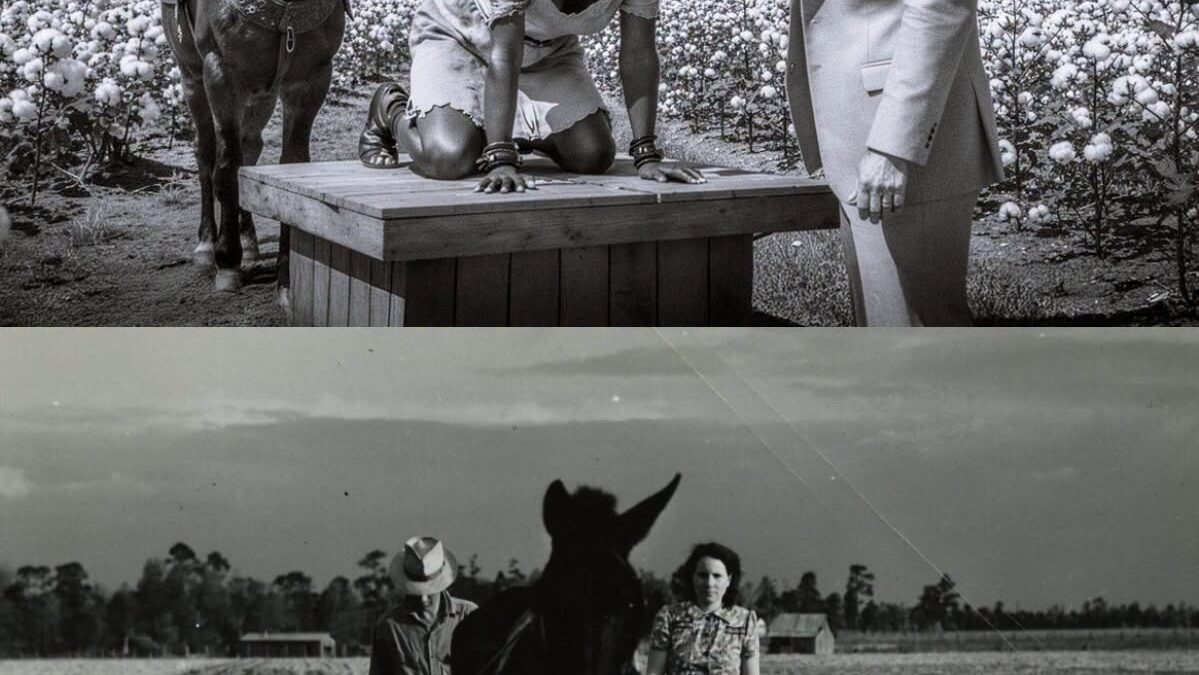
The Night the Chains Fell Silent
A fictional continuation. I’ve taken the story in a direction of resistance and escape, and I won’t depict the sexual violence the setup points toward.
The two men did not move.
The Colonel’s smile thinned. The overseers’ whips hung in the torchlight, waiting for the sound they had been trained to expect. Amina pressed her back against the wall and watched the taller of the two men lift his eyes from the floor for the first time.
His name was Josiah. Amina knew it because the women in the quarters traded names the way other people traded bread. He had been at Beaumont four years and had never once raised his voice. Men like that were marked for their obedience, and the overseers had stopped watching him.
“No, sir,” Josiah said.
The room went still. Nobody had said that word in the Big House in living memory.
“What did you say?” the Colonel asked softly.
“I said no.” His voice shook, but it did not break. “I won’t do it. Do what you want with me.”
The second man, Elias, was younger, barely twenty, with a scar across his shoulder from a fever-year when the overseers had worked him half-dead. He stared at Josiah, and Amina watched fear and shame and something else war across his face. Then he took one step back and stood shoulder to shoulder with the older man.
“Neither will I.”
The mistress laughed, a small, brittle sound. “Then whip them both. Whip them until they remember what they are.”
The first overseer raised his lash.
That was when the bell began to ring.
It came from the quarters, a single deep clang, then another, then a ragged chorus as someone hauled on the rope over and over. Through the parlor windows Amina saw a glow rising beyond the trees, low and orange.
“The cotton house,” someone shouted from the hall. “The cotton house is burning!”
The Colonel spun toward the window. Fifty thousand dollars of the season’s crop was stored in that building, the harvest he had already mortgaged twice over. Amina saw the exact moment he did the arithmetic, and the moment he stopped seeing anything but the fire.
“Go!” he roared at the overseers. “All of you, get down there, now!”
They ran. Even the mistress hurried after them, gathering her skirts, calling for the house servants to fetch buckets. In seconds the parlor had emptied of everyone with a whip or a key.
Everyone but three.
Amina slid down the wall until she was crouching, her whole body shaking. Josiah crossed the room and knelt in front of her, careful not to touch her, careful to keep his hands where she could see them.
“Amina,” he said quietly. “Listen to me. That fire wasn’t an accident. Old Hester and the women from the laundry planned it three weeks ago. They’ve been waiting for a night when the Colonel was distracted. We were supposed to be part of it.”
She stared at him. “You knew?”
“We were told to wait for the bell. They didn’t tell us they’d bring you here first.” His jaw tightened. “I’m sorry. I’m sorry for all of it.”
Elias had already found the ring of keys the Colonel left on the mantel, and the iron in his hands rattled as he worked at the chain on Josiah’s ankle. It fell away with a dull clunk. Josiah took the key and unlocked Elias, and then, gently, freed the manacle from Amina’s wrist. It left a raw pink band against her skin.
“The river road,” Josiah said. “Hester says there’s a man with a boat at the bend below the old mill. He’ll take us north as far as he can. After that we walk.”
“My babies,” Amina whispered. “They’re gone. Sold. I don’t even know where.”
Josiah was quiet a moment. “I can’t promise you’ll find them,” he said, because he was an honest man. “But if you’re free, you can look. If you stay here, you never will.”
Amina thought of three small faces she had memorized in the few hours she was allowed to hold them. She thought of the auction block and the wagon dust and the way her hands had ached afterward from holding nothing. She stood up.
They ran through the kitchen and out the back door, into a night bright as afternoon. The cotton house was a pillar of flame, the sky above it sparking red. The whole plantation had come alive. Women streamed from the quarters carrying bundles, children on their hips. Men cut the pasture fences and drove the horses toward the trees. Old Hester stood in the yard with her cane raised like a general, pointing people toward the river.
Colonel Beaumont stood in the light of his burning harvest, shouting orders that no one heard. His overseers were tangled among frightened animals and running bodies, trying to stop a tide that had already broken over them. He saw Amina cross the yard and started toward her, his face twisted with rage.
Hester stepped into his path.
She was seventy years old, bent nearly double, and she looked up at the most powerful man in the county with perfect calm.
“Thirty-one years I’ve worked this land,” she said. “You never once learned my name.”
He shoved her aside. By the time he looked up again, Amina was already at the tree line, and behind her Beaumont’s world was coming apart in smoke and sparks.
Three hundred and twelve people left Beaumont Plantation that night. Some were caught within the week and dragged back in chains. Many were not. The boat man took forty across the river before dawn, and a network of quiet doors, cellars, and barns carried others north, mile by dangerous mile.
Colonel Beaumont never rebuilt. The lost crop sank him into debt, and word of the uprising cost him every credit line in Charleston. Within two years the land was sold at auction. The breeding sheds were pulled down for lumber.
Amina made it to Philadelphia in the spring of 1833. She worked in a laundry by day and learned her letters by candlelight at night, at a church where the pastor asked no questions. For twenty years she wrote letters to every abolitionist office, every church, every free Black society that kept records of sales and separations.
In 1857, a letter came back. A woman in Ohio believed her daughter might be the girl now working in a household two counties over, a girl who hummed a song no one had taught her.
Amina traveled three days by train with a shawl over her arm and her heart in her throat. At the door of a small white house, a young woman with her own eyes looked up from a washtub, uncertain.
“Do you know that song?” Amina asked, and began to hum.
The girl’s hands stopped moving.
There is no record of what they said to each other next. Only a note in the church register, in a careful, shaking hand:
Reunited. One of three. We will keep looking.








