THE MOST SCANDALOUS AUCTION IN RAVENPORT — THEY PAID A FORTUNE FOR AN ENSLAVED WOMAN… BUT NO ONE KNEW WHAT SHE HID INSIDE HER DRESS

PART 2
The library handle turned slowly. Evelyn stood frozen beside the desk, the yellowed letter crushed against her palm.
Beyond the door came the scrape of boots on polished wood, the low murmur of unfamiliar men, and the nervous voice of a servant trying to stop them.
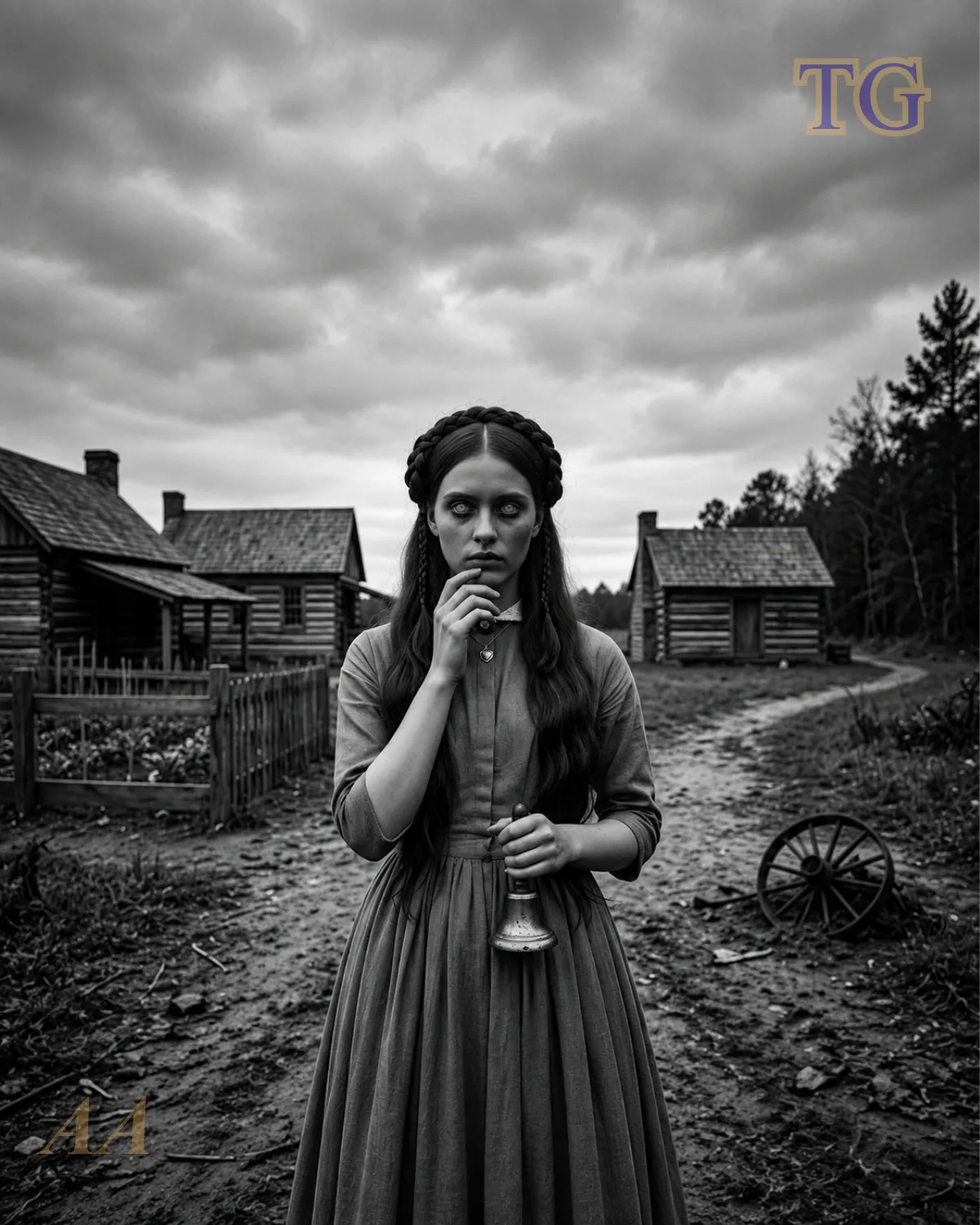
Lord Ashford moved in front of Evelyn just as the door flew open. Three men entered.
The first was broad-shouldered, rain dripping from the brim of his black hat. Behind him stood two younger men in heavy traveling coats.
Mud stained their boots, and one carried a leather case beneath his arm. The older man’s eyes moved immediately past Ashford and settled on Evelyn.
“There she is.” Evelyn felt her stomach tighten. “My name is Samuel Blackwood,” the stranger said.
“Richard Blackwood is my brother.” The name struck her like a slap. For an instant she was twenty-one again, standing beneath the Caribbean sun, hearing Richard Blackwood shouting orders across the plantation yard.
She remembered the crack of whips in distant fields, the smell of boiling sugar, and her mother’s frightened face whenever Richard entered a room.
Ashford did not move. “You have entered my home without permission.” “We came for property belonging to my family.”
Samuel pointed directly at Evelyn. “Her.” Silence swallowed the room. Rain rattled violently against the windows.
Evelyn’s fingers tightened around the hidden letter. Ashford’s voice became dangerously quiet. “Choose your next words carefully.”
Samuel smiled. “You paid for her. That doesn’t make her history disappear. My brother learned that certain documents were stolen before she left the island.
A letter and a gold locket. We believe she has them.” Evelyn’s blood turned cold.
They knew. After all these years, they knew. Samuel stepped toward her. “Give them to me.”
“No.” The word escaped Evelyn before fear could stop it. Samuel stared at her, apparently astonished that she had spoken.
Then he laughed. “You’ve forgotten what you are.” “No,” Evelyn replied, her voice shaking. “I remember exactly what you made me.”
Samuel’s smile disappeared. He lunged forward. Ashford slammed his hand against Samuel’s chest and shoved him backward.
One of the younger men immediately reached beneath his coat. Metal flashed. A pistol. “Stop!”
Evelyn’s scream filled the library. Everyone froze. The only sound was rain and the furious ticking of the clock above the fireplace.
Evelyn slowly pulled the letter from behind her back. “You want this?” Samuel’s eyes widened.
“Give it to me.” “Tell me why.” “Evelyn—” Ashford warned. “No.” She looked at Samuel.
“I have spent my entire life obeying people who believed they owned my body, my work, even my name.
Not tonight. Tell me why this letter frightens your family.” Samuel’s jaw tightened. Ashford suddenly answered for him.
“Because it proves Richard Blackwood committed fraud.” Evelyn turned. Ashford held the gold locket beneath the candlelight.
“These initials belong to Jonathan Peter Blackwood. Richard’s younger brother.” Evelyn stopped breathing. Ashford looked directly into her eyes.
“Your father.” The room seemed to tilt. “No.” “Jonathan lived on the island twenty-two years before you were sold,” Ashford continued.
“According to this letter, he fell in love with an enslaved woman named Sarah.” Evelyn’s lips parted.
“My mother.” “Yes.” Outside, thunder rolled over Ravenport. Ashford unfolded the letter again. “Jonathan acknowledged you as his daughter.
More importantly, he instructed his brother Richard to arrange your freedom and provide money for your education.
He signed the document before two witnesses.” Evelyn looked at Samuel. He said nothing. And his silence told her everything.
“Richard knew?” Samuel’s eyes shifted away. “He knew?” Evelyn shouted. “Yes!” Samuel’s answer cracked through the room.
Evelyn staggered backward. Images crashed through her mind: Richard ordering tutors to teach her reading; Richard watching her from across rooms with a strange resentment she had never understood; Richard suddenly announcing that she would be sent overseas.
He had not educated her out of kindness. He had been obeying part of his dead brother’s request while refusing the part that mattered most.
Freedom. “You sold me knowing I was supposed to be free.” “My brother sold you,” Samuel snapped.
“And you came here to destroy the proof.” Samuel’s face hardened. “You have no idea what that paper could do.”
“I think I finally do.” He moved. Everything happened at once. Samuel seized the letter.
Evelyn held on. Paper tore. Ashford struck Samuel’s arm. The man with the pistol raised his weapon.
A deafening explosion shattered the room. Glass burst from a cabinet. Evelyn screamed and dropped to the floor.
For several seconds, she heard nothing but a high ringing in her ears. Then she smelled gunpowder.
Ashford was still standing. The bullet had missed him by inches and buried itself in the wall.
Servants rushed toward the library. Men shouted downstairs. Samuel stared at the pistol as though he had not expected his companion actually to fire it.
That hesitation was enough. Ashford grabbed a heavy brass candlestick and struck the gunman’s wrist.
The pistol crashed onto the floor. Evelyn kicked it beneath the desk. “Get out!” Ashford roared.
Samuel looked from Ashford to the servants gathering at the doorway. He knew he had lost.
But before leaving, he pointed at Evelyn. “That paper won’t save you. Men with more money than you can imagine have spent generations ensuring people like you remain exactly where they belong.”
Evelyn stood. Her knees trembled, but her voice did not. “Then perhaps it’s time they became afraid.”
Samuel stared at her. Then he turned and disappeared into the rain. The front door slammed.
Evelyn remained motionless until the sound of the departing carriage faded into the storm. Only then did she look down.
Half the letter remained in her hand. Ashford had the other half. It was enough.
The months that followed became a battle fought not with pistols but with ink, seals, witnesses, and court petitions.
Ashford contacted lawyers. Records were requested from the Caribbean. Old correspondence was found. One of the witnesses named in Jonathan Blackwood’s letter was discovered alive in Bristol, an elderly former clerk who remembered the document and agreed to testify.
Richard Blackwood had been ordered to free Evelyn. He had deliberately refused. More evidence emerged.
Jonathan had even left money for his daughter’s future. Richard had absorbed it into the plantation accounts and concealed its existence.
Evelyn had not merely been enslaved. She had been robbed. When the final documents were placed before her, she stared at them until the words blurred behind tears.
Ashford sat opposite her. “You can pursue the case.” “What happens if I lose?” “You could lose everything.”
“And if I win?” Ashford leaned back. “Then, for the first time, the law will be forced to acknowledge what should never have required proof.”
Evelyn swallowed. “That I belong to myself.” “Yes.” She filed the case. The hearings drew crowds.
People who had once attended the auction returned years later to watch Evelyn walk into the courthouse wearing a dark blue dress, no chains on her wrists and no auction number attached to her name.
Newspapers printed every development. Some called her courageous. Others called her dangerous. Threatening letters appeared beneath Ashford’s door.
Evelyn continued. Then, on a cold December morning, judgment came. The courtroom was so quiet she could hear someone breathing behind her.
The judge adjusted his spectacles. The surviving letter was authentic. The witnesses were credible. Jonathan Blackwood’s instructions had been deliberately violated.
The sale was fraudulent. Evelyn was legally free. For several seconds, she did not understand.
People began whispering. Someone behind her gasped. Ashford touched her shoulder. “Evelyn.” She turned toward him.
“You won.” Her knees nearly gave way. She walked outside. Snow was falling. Tiny white flakes settled on the courthouse steps and melted against her face.
Hundreds of people waited behind barriers, but their voices became distant. Evelyn raised both hands and stared at her wrists.
Nothing surrounded them. No iron. No silver chains. Nothing. She began to cry. Not gracefully.
Not quietly. Twenty years of terror seemed to leave her body in great, shaking sobs.
Ashford stood beside her without speaking. Eventually Evelyn looked at him. “What happens now?” He smiled faintly.
“Whatever you choose.” Those three words meant more than the judgment. Whatever you choose. For the first time in her life, tomorrow belonged to her.
Years passed. Evelyn remained at Ashford House, but never again as property. Ashford offered her paid employment managing his household and business correspondence, and she accepted on her own terms.
She received wages, opened an account in her own name, and eventually purchased a modest building near the harbor.
There she opened a school. Its first students were twelve children whose parents could not afford tutors.
Some were children of sailors. Some were orphans. Some had darker skin and had already learned that society would judge them before hearing them speak.
Evelyn taught every one of them to read. Above the classroom door hung the gold locket.
She kept the letter locked safely away. Decades passed, and Ravenport changed around her. Ships grew larger.
Old merchants died. Mansions changed owners. Ideas once whispered behind locked doors began to be spoken publicly.
Lord Ashford grew old. One winter morning, Evelyn found him sitting beside the library fire, a blanket across his knees.
“Do you remember the auction?” He asked. “Every day.” “I’ve regretted something about it for years.”
Evelyn sat beside him. “What?” “That I bought you.” She studied his weathered face. “You also helped me become free.”
“That does not erase what I did.” “No,” Evelyn said. “It doesn’t.” He nodded slowly.
She took his hand. “But a person is more than the worst thing he accepted because the world told him it was normal.
You had the chance to change, Edward. You chose to.” Tears appeared in the old man’s eyes.
He died peacefully several months later. His will left much of his estate to charitable causes.
A substantial portion went to Evelyn’s school. She expanded it. Twelve pupils became forty. Forty became more than a hundred.
Years later, Evelyn stood before a classroom filled with children repeating letters from a blackboard.
Sunlight poured through the windows. Chalk scratched against slate. Someone laughed in the corridor. Evelyn closed her eyes.
For an instant she heard another sound. An auctioneer’s hammer. Sold. She opened her eyes again.
The sound was gone. In its place came children’s voices reading aloud. On her seventy-eighth birthday, Evelyn returned to the courtyard where she had once been auctioned.
The building had changed. The platform was gone. Merchants hurried through the street without knowing what had happened there decades earlier.
Evelyn stood exactly where she remembered standing in chains. She carried the old letter. Beside her was a young teacher from her school.
“Are you certain?” He asked. “Yes.” Evelyn handed him the document. “Put it in the school archive.”
“You’ve protected it your entire life.” “Because once it could have saved me.” She looked toward the harbor.
“Now I want it to teach them.” The young man carefully accepted it. Evelyn remained alone for another minute.
She remembered her mother pressing the locket into her palm. She remembered Samuel Blackwood pounding on the library door.
She remembered the gunshot. The courtroom. The snow. And three words. Whatever you choose. She smiled.
Then she turned her back on the courtyard and walked away. When Evelyn died several years later, the school bell rang once for every year of her life.
Former students filled the street outside. Sailors removed their hats. Shopkeepers closed their doors. Men and women who had learned their first words beneath her roof stood silently as her coffin passed.
Inside the school, the gold locket remained above the classroom door. Beside it was a framed sentence written in Evelyn’s own hand:
“Freedom begins when no human being has the power to decide that another belongs to them.”
The woman who had once stood on an auction platform as merchandise died with property in her own name, students who loved her, and a story no one could bury.
Richard Blackwood had tried to erase her identity. Samuel Blackwood had tried to destroy the proof.
Time erased them instead. But Evelyn’s name remained. And long after the auctioneer’s hammer had fallen silent, generations of children continued to walk through the doors she had opened.
Disclaimer: This story is entirely fictional and was created solely for entertainment purposes. It does not represent any organization or individual, nor does it promote inappropriate behavior.
This content was created with the assistance of AI.








