THE COFFEE BARON’S FORBIDDEN LOVE: THREE SECRET CHILDREN, A SLOW POISONING, AND A DEATH THAT NEVER MADE SENSE
PART 3 — THE BARONESS WAS DEAD, BUT THE POISON HAD NOT FINISHED ITS WORK
The physician examined Claire’s body while Antoine stood in silence. Poisoning was established as the cause, and the circumstances pointed toward suicide, but whispers spread before Claire was even buried.
Servants knew that husband and wife had fought. Claire’s family knew the marriage had been collapsing.
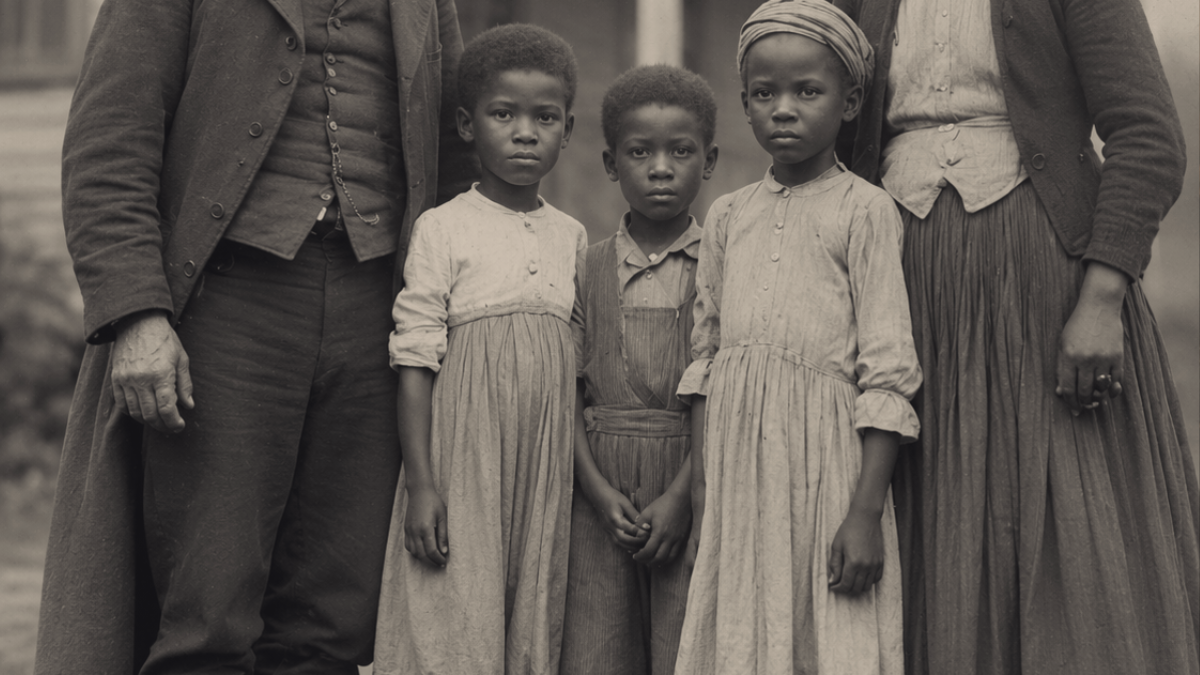
And somewhere beyond the main estate lay the strongest motive anyone could imagine: Antoine had another woman and three secret children.
The authorities questioned him. Antoine insisted that Claire had taken the poison herself after their confrontation, and there was no evidence sufficient to establish murder.
Officially, the death was treated as suicide. Unofficially, the story became darker with every retelling.
Some said Antoine had killed his wife to remove the final obstacle between himself and Marianne.
Others said Claire had preferred death to public humiliation. Antoine could prove neither rumor false to everyone’s satisfaction, and Claire could no longer explain herself.
Her funeral was cold and sparsely attended. Claire’s relatives severed their relationship with Antoine, former friends withdrew invitations, and doors that had once opened instantly to the Baron of Cedar suddenly closed.
Claire had predicted that scandal would destroy his place in society. She had been right.
But Antoine no longer cared about the invitations. Marianne was still alive. He returned to the secluded house and found her in bed, her legs motionless beneath the blankets.
When he told her Claire was dead, Marianne did not celebrate. The woman who had nearly murdered her was gone, yet Marianne quietly said that no one deserved such an ending.
Antoine promised he would make her walk again. It was a promise love could not guarantee.
Doctors came from across the island. They tried baths, massage, medicines, exercises, and every treatment available to them, but although Marianne slowly regained some strength, the damage could not simply be erased.
Months later she managed to sit upright; eventually she could stand with assistance, then take several painful steps.
She would survive. But she would carry a cane. The poison had failed to take her life, yet it had left its signature on her body forever.
That changed Antoine. He had spent years convincing himself that secrecy protected Marianne and the children, but secrecy had almost killed her.
He had delayed freeing her because part of him feared losing her. He had lived comfortably inside a system whose cruelty Marianne had recognized from the first day she opened Rousseau.
Now there was nowhere left to hide. A year after Claire’s death, Antoine summoned a notary.
The man arrived expecting an ordinary matter of property. Instead, Antoine dictated a declaration acknowledging Thomas, Anne, and Joseph as his children and naming them heirs to his fortune.
The notary stopped writing. He understood exactly what Antoine was doing. Three mixed-race children born to a woman who had been enslaved would now be publicly connected to one of the island’s wealthiest families.
“Baron,” the notary asked carefully, “are you certain?” Antoine did not hesitate. “They are my children.”
The document was registered. The scandal exploded. Families that had already shunned Antoine now considered his decision an assault on the social order itself.
Letters arrived. Some contained insults; others contained threats. Men who had once eaten at his table refused to acknowledge him.
Antoine answered them with another document. He divided the Cedar Estate, reserving one portion for himself and setting aside hundreds of hectares for Thomas, Anne, and Joseph to inherit.
Whatever society thought of their birth, Antoine intended that his children would possess land, money, education, and the independence to survive without begging acceptance from anyone.
Then came the document Marianne had waited years to receive. Her freedom. Antoine placed the papers before her.
No tricks. No delay. No promise of freedom at some convenient future moment. Marianne was legally free.
Then Antoine asked her to marry him. Her answer stunned him. “No.” For years, Antoine had imagined that freedom would finally remove the barrier between them and transform their hidden relationship into an ordinary marriage.
Marianne saw it differently. Becoming the next Baroness and moving into Claire’s house would not erase what had happened.
She had been purchased. She had been hidden. She had been poisoned. And now, finally, she could choose.
She chose Antoine—but on her own terms. Marianne told him she would remain at the smaller property where her children had been born.
She did not want Claire’s rooms, Claire’s title, or Claire’s place in colonial society. She wanted to be Marianne, not the replacement Baroness.
Antoine accepted. It was perhaps the first time their relationship could exist without ownership standing behind it.
Their lives changed rapidly after that. Antoine increasingly managed the plantation from a distance while spending much of his time with Marianne and the children.
Yet another problem began haunting him whenever he returned to the coffee fields. The estate still depended on enslaved people.
Marianne had forced him years earlier to confront the contradiction between reading philosophers who spoke of freedom and simultaneously owning human beings.
He had evaded that contradiction when it was convenient. Now he could no longer look at his workers without remembering that Marianne had once occupied precisely the same legal position.
So Antoine began dismantling the system that had made his fortune. He started freeing enslaved workers connected to his estate and offering paid employment to those who wished to remain.
The transition unfolded over years rather than overnight, but the direction was unmistakable. People whom the estate had once treated as property began receiving freedom and wages.
Other plantation owners thought Antoine had lost his mind. They predicted financial collapse. But Cedar continued producing coffee.
And Antoine discovered that losing absolute power over other human beings did not mean losing everything.
Meanwhile, Marianne found a purpose larger than survival. The woman who had once stared at books she could not read began teaching children to read them.
A school emerged on the estate. At first it was small, almost experimental: reading, writing, arithmetic, history, science, and the philosophy Marianne herself had discovered in Antoine’s library.
But one principle distinguished it from the world surrounding it. Children learned together. Black children.
Mixed-race children. White children. At the same tables. Marianne taught them with a cane beside her chair.
Every step remained a reminder of the poison. Every lesson became an answer to it.
Thomas grew into the most intense reader of the three children. Knowing exactly what his mother had endured, he became fascinated by law and dreamed of defending people whose rights powerful institutions ignored.
Anne developed her mother’s fierce independence and eventually helped teach younger children. Joseph found another language.
Art. He drew faces, fields, workers, trees, houses, and eventually paintings that seemed to capture the strange world into which he had been born—a world where privilege and suffering existed side by side.
Years passed. Antoine’s hair turned gray. Marianne’s legs never fully recovered, but the cane that had once represented Claire’s cruelty gradually came to symbolize something different.
She had survived. That mattered. One afternoon, nearly two decades after Antoine had first seen Marianne at the slave market, the two sat beneath a tree overlooking the school.
Children raced through the yard while older students bent over books. Antoine watched them silently.
Then the apologies began again. He apologized for buying Marianne. For owning her. For delaying her freedom.
For hiding her. For believing he could protect his secret family while continuing to live comfortably inside the world that had made their secrecy necessary.
And he apologized for the one thing no amount of land or money could repair.
Her legs. Marianne looked down at her cane. Antoine could never erase that scar. Nor could their later love erase the imbalance that had defined the beginning of their relationship.
When they first became close, Antoine possessed legal power Marianne did not. Whatever feelings developed between them, that reality remained part of their story.
But freedom had eventually given Marianne something slavery never could. A choice. And when she finally had the legal ability to walk away, she had refused Antoine’s title, refused his mansion, refused the identity he offered her—and chosen the life she wanted instead.
She stayed beside him as Marianne. Not as his property. Not as Claire’s replacement. Not as a secret hidden in the mountains.
Antoine looked toward the school. Thomas was helping a younger child with a book. Anne was guiding another student through a difficult passage.
Joseph sat beneath a tree sketching what he saw. Children whose families would once have been separated by rigid racial and social boundaries were learning beside one another.
That was when Antoine finally understood the limit of redemption. A person could not travel backward.
He could not return to the slave market and refuse to participate. He could not give Marianne back the years in which she belonged legally to another person.
He could not prevent Claire’s jealousy, remove the poison from Marianne’s body before it damaged her nerves, or bring Claire back from the room where she had died.
Nothing he built afterward could make those events unhappen. But the future did not have to imitate the past.
That became the true legacy of Cedar Estate. Not the mansion. Not the coffee. Not Antoine’s title.
Not even the fortune. It was Marianne standing before a classroom with a cane in one hand and a book in the other.
The woman who had once been forbidden control over her own life was now opening entire worlds for children through words.
The woman someone had attempted to silence was being listened to. The woman who had once been bought was teaching children that human worth could never be measured by ownership, wealth, ancestry, or skin.
Antoine sometimes watched from a distance. He did not interrupt. Perhaps he understood that this part of the story belonged to her.
Marianne opened one of the books Antoine had first placed in her hands years before and began teaching.
Around her sat children whose lives might unfold differently because somebody had decided that education should cross the boundaries society had built.
Outside, Antoine heard their voices through the open windows. He looked at Thomas. At Anne.
At Joseph. Three children who had once been hidden as dangerous evidence of a forbidden relationship now walked openly across land they would inherit.
He looked at Marianne. She still needed the cane. That would never change. But neither would another fact.
Claire’s poison had damaged Marianne’s body, yet it had failed to decide what Marianne would become.
The system that enslaved her had failed too. And Antoine, who once believed wealth and status were the foundations of his world, discovered late in life that his most meaningful legacy had begun only when that world collapsed.
Their ending was not spotless. It was not a fairy tale in which love magically purified everything that came before it.
Claire remained dead. Marianne remained scarred. Antoine remained responsible for choices he could never reverse.
Yet Thomas, Anne, and Joseph no longer had to hide. Marianne no longer belonged to anyone.
And inside a school built on land once associated with bondage, children sat together and learned the language of freedom.
That was the final irony of Cedar Estate. A place built through ownership became a place that taught human dignity.
A secret family became its most visible legacy. And the woman who had once arrived there in chains became the person standing at the front of the classroom.
Marianne paused during a lesson and looked through the window. Antoine was beneath the old tree.
Their eyes met. Neither needed to speak. Behind them lay betrayal, slavery, secrecy, jealousy, poison, scandal, and death.
Before them sat the children. Marianne turned back toward the classroom and continued teaching. And Antoine remained beneath the tree, finally understanding that redemption could never erase a scar.
It could only determine what was built around it. And what they had built from the ruins was something neither poison, prejudice, nor the secrets of the dead could destroy.
Disclaimer: This story is entirely fictional and created for entertainment purposes only. It does not represent any organization or individual, nor does it encourage inappropriate behavior. The content was generated with AI assistance.








