HER FATHER SENT THE “WRONG” DAUGHTER TO 3 MOUNTAIN MEN—THEIR THREE-WORD REPLY CHANGED HER LIFE FOREVER
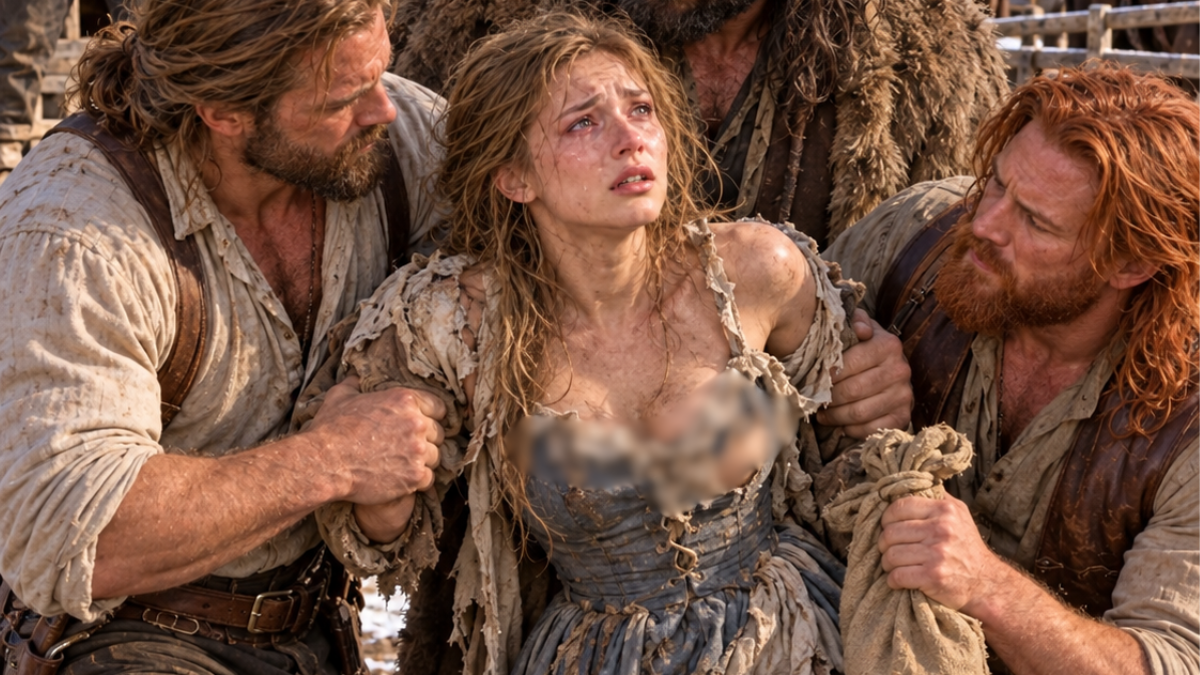
PART 3 — THE “SPARE” DAUGHTER CAME DOWN THE MOUNTAIN WITH A GUN—AND BURIED A 12-YEAR SECRET FOR GOOD
Daisy slept in Blythe’s room while the others gathered around the dying fire. Cormac sat motionless for a long time before finally breaking the rule he had imposed upon himself: he spoke Horus Vain’s name inside the cabin.

Then he told Blythe what had happened twelve years earlier. Cormac had been twenty-two when a blizzard forced him into a remote shack near Sable Ridge.
Inside, he found Horus Vain standing over a dead miner named Ephraim Coyle. The floor was bloody, a shovel was bloody, and Coyle was no longer breathing.
Vain had stolen money entrusted to him by homesteaders and used part of it in a secret silver deal.
Coyle knew. Coyle intended to expose him. So Vain silenced him. Cormac had ridden through the storm to report the murder.
A marshal recorded his statement and promised a trial in spring, but when Cormac returned, the marshal was dead, the papers had vanished, and Vain calmly denied everything.
Cormac was a young mountain man with no wealth and no surviving evidence; Vain was a respected banker.
Then Vain threatened Naomi Crowder and every person Cormac loved. Cormac kept silent. Not because he was afraid for himself.
Because he believed speaking would kill his family. For twelve years, he waited for evidence.
Now Blythe finally saw the whole pattern. Her father had owed money. Who controlled that debt?
Horus Vain. Her father had been strangely eager to send a daughter to Cormac’s isolated mountain.
Why? Because a woman inside Cormac Crowder’s home could become leverage. A hostage. A weakness.
Blythe felt sick. Her father had not merely sold her because he was drunk and desperate.
Someone might have wanted a Meadowcroft daughter inside the Crowder cabin. Then Blythe’s mind leapt to Daisy.
Elias Vain had fathered her child. If Elias had loved Daisy, why had he allowed her to be thrown into the winter alone?
Unless he had never known. Or unless he was unable to come. “Cormac,” Blythe whispered.
“Elias is dead.” The brothers stared at her. She explained it quickly. Elias was the banker’s son.
If he were alive and knew Daisy carried his child, he had every reason to intervene.
Yet Daisy had been abandoned, her father terrified, and Horus Vain’s shadow now reached all the way to the mountain.
Blythe reached the only conclusion that fit. Horus Vain had silenced his own son. Cormac looked at her as though the woman standing before him was no longer the frightened substitute bride from the frozen porch.
At dawn, they went down the mountain. Daisy rode wrapped in quilts. Malachi carried his medical kit.
Jude carried a carbine. Cormac kept his Henry rifle within reach. And Blythe carried a pistol.
The spare daughter was going home. Only this time, nobody was sending her anywhere. She was choosing the road.
The settlement looked almost insultingly ordinary when they arrived. Smoke curled from chimneys. Horses stood outside stores.
Men crossed muddy streets carrying sacks of flour. Yet somewhere behind those windows lived the truth that had poisoned Cormac’s life for twelve years.
Their first confrontation was with Blythe’s father. Jebidiah Meadowcroft looked smaller than she remembered. When he saw Daisy alive, something inside him collapsed.
When he saw Blythe standing beside Cormac instead of behind him, the rest followed. The truth came out piece by piece.
Yes, there had been debts. Yes, Horus Vain controlled them. Yes, pressure had been applied.
Jebidiah had told himself he was merely settling accounts. He had drowned whatever remained of his conscience in whiskey until daughters became numbers and promises became transactions.
But there was something else. Documents. Old papers connected to Vain. Records he had hidden rather than destroy.
That changed everything. Cormac had possessed memory. Now they had evidence. Names, payments and transactions began forming a trail back through the years.
Old accounts connected Vain to missing money. Forgotten testimony and people who remembered fragments of the past suddenly mattered again.
The murder in the mountain shack was no longer just the story of an uneducated young trapper against a banker.
The dead had begun speaking through paper. And then the final piece surfaced. Evidence connected to Elias.
Daisy’s story had been true. Elias had loved her. But Elias had learned too much about his father.
The son had become another threat. Horus Vain had spent twelve years protecting one secret, and in trying to bury it, he had created another.
By the time the marshal confronted him, Vain’s respectable world was collapsing. Blythe stood inside the marshal’s office beside Cormac.
Her father was there. Witnesses were there. Papers covered the desk. Horus Vain looked from one face to another.
For years he had survived because every person who knew a piece of the truth stood alone.
Cormac had been alone. Coyle had been alone. Elias had been alone. Jebidiah had been weak.
Daisy had been frightened. But now all those separate pieces had been brought into one room.
By Blythe. The daughter nobody had valued enough to fear. The marshal moved to arrest Vain.
Vain reached inside his coat. Cormac saw it first. “Blythe!” The pistol appeared. Vain fired.
Cormac slammed Blythe toward the floor as the bullet tore into the wall behind them.
Before Vain could fire again, the marshal drew and shot. Silence followed. Horus Vain stared downward as though confused by the wound in his body.
Then his knees folded. The banker who had controlled men through debt, secrets, money and fear fell onto the floor.
He never stood again. For several seconds, Cormac seemed unaware of anyone except Blythe. He dropped beside her.
“Blythe.” She caught both his hands. “I’m all right.” He searched her face. “Blythe.” “I’m all right, honey.
Look at me.” He did. Only after he believed her did the enormous scarred mountain man finally close his eyes and press his forehead against hers.
Twelve years were over. The evidence recovered afterward did what Cormac’s word alone never could.
The old murder was formally connected to Horus Vain, the financial records supported the theft allegations surrounding his dealings, and Cormac’s long-buried account was finally taken seriously.
When the legal proceedings ended, the territory acknowledged what should have been acknowledged years before.
Cormac Crowder had told the truth. Daisy survived. So did her unborn child. She remained in town to recover, and their father stayed near her.
The broken man who had once traded his daughters finally stopped drinking. Redemption did not erase what he had done, and Blythe never pretended that it did, but in the years ahead he tried to become someone his daughters could look at without fear.
Then spring came. The Crowder wagon climbed the mountain again beneath a blue sky. Wildflowers appeared along the road.
Snow withdrew into the shadows. The cabin emerged around the last shoulder of granite, its roof turning green beneath the sun.
Blythe stared at it. The first time she had seen that cabin, she thought it marked the end of her life.
Now it looked like home. Cormac stopped the wagon. He turned toward her. Months earlier, he had made a promise: when spring came, Blythe would choose.
No debt would choose. No father would choose. No bargain would choose. She would. “Miss Meadowcroft,” Cormac said.
“mr. Crowder.” He reminded her of the promise. Blythe smiled. She told him she had already decided.
Not that morning. Not after Horus Vain died. Not because she had nowhere else to go.
She had decided during the winter, inside that cabin, on a night when she laughed at Cormac’s table and looked around to find three men watching her as though her laughter was something precious.
That was when she understood. She had spent her childhood believing home was the place where blood relatives tolerated her.
The Crowders had taught her otherwise. Home could be the place where somebody saved a chair for her.
Where a man put her first bullet-pierced cup on the mantel. Where a brother taught her to shoot.
Where another trusted her intelligence. Where nobody cared that Daisy was prettier. Where being strong did not make Blythe less of a woman.
It made her Blythe. She reached for Cormac’s rough hand. She told him she was staying.
As his wife, if he still wanted her. As Malachi’s sister. As Jude’s sister. And as the woman who intended to keep the fourth chair at their table occupied for a very long time.
Cormac Crowder closed his eyes. When he opened them, they were wet. He said he would have her if she would have him.
Blythe answered by kissing him. Behind them, Jude let out one victorious shout before hiding his grin beneath his hat.
Malachi pulled out his journal. He wrote three words. Naomi would smile. Years passed. Blythe and Cormac had children of their own.
Daisy gave birth to a boy and eventually became a schoolteacher, raising her son among the family that had gathered around her when she had nowhere else to turn.
Malachi eventually opened a small clinic and spent his life treating people who could not always find someone willing to treat them.
Jude married, had children, and filled his own house with the songs he had once quietly sung beside the Crowder fire.
Their father never drank again. Near the end of his life, Blythe sat beside his bed.
He looked at the daughter he had once traded away. “Straight back, honey,” he whispered.
Then came the words he should have spoken decades earlier. “I am so sorry.” Blythe kissed his forehead.
She forgave him. Not because what he had done was small. But because what he had done no longer owned her.
And Cormac? He and Blythe grew old together in the cabin near the timberline. He built her a porch.
She planted flowers. She became a better shot than he was and reminded him of that fact whenever opportunity allowed.
Every year, winter returned to the mountain. Every year, they sat beside the same fire.
And sometimes Cormac would take her hand and repeat the words her mother had given her as a child.
Straight back. Strong hands. A mind that would not quit. But Blythe eventually added one line of her own.
A house that chose her. Because Blythe Meadowcroft had spent twenty-two years believing she was the spare daughter.
Daisy was beautiful. Daisy was wanted. Daisy was worth protecting. And Blythe? Blythe was useful.
Disposable. Something a father could substitute when the daughter a man actually wanted refused to go.
But the strangest thing about that frozen November morning was that her father had been wrong about almost everything.
He thought he was sending away the daughter worth less. Instead, he sent away the daughter strong enough to survive the mountain.
Strong enough to save a family. Strong enough to uncover a murder. Strong enough to face the man who had terrorized Cormac Crowder for twelve years.
And strong enough, finally, to choose herself. It had all begun in frozen mud. A frightened young woman had stood beneath a wagon carrying three armed mountain men and confessed the humiliating truth.
“My father sent me in my sister’s place.” She had expected rejection. She had expected anger.
She had expected to hear once again that somebody would rather have Daisy. Instead, the scarred man looked down from the wagon.
He saw the mud on her boots. The calluses on her hands. The straightness of her back.
And perhaps, long before Blythe herself understood it, Cormac Crowder saw exactly who had been standing in front of him.
He gave her the first invitation of her new life. Three simple words. “Get in the wagon.”
And she did.
Disclaimer: This story is entirely fictional and was created solely for entertainment purposes.
It does not represent any organization or individual, nor does it promote inappropriate behavior. This content was created with the assistance of AI.








